https://aviationweek.com/themes/custom/particle/dist/app-drupal/assets/awn-logo.svg
Skip to main content
  • Market Sector
    • Aerospace
    • Air Transport
    • MRO
    • Defense
    • Space
    • Business Aviation
  • Markets
    • Aerospace
      • Aircraft & Propulsion
      • Connected Aerospace
      • Emerging Technologies
      • Manufacturing & Supply Chain
      • Advanced Air Mobility
      • Sustainability
    • Air Transport
      • Aircraft & Propulsion
      • Interiors & Connectivity
      • Airports & Networks
      • Airlines & Lessors
      • Safety, Ops & Regulation
      • Maintenance & Training
      • Sustainability
    • MRO
      • Aircraft & Propulsion
      • Interiors & Connectivity
      • Emerging Technologies
      • Supply Chain
      • Safety, Ops & Regulation
      • Workforce & Training
      • Sustainability
    • Defense
      • Aircraft & Propulsion
      • Sensors & Electronic Warfare
      • Missile Defense & Weapons
      • Supply Chain
      • Budget, Policy & Operations
      • Sustainability
    • Space
      • Launch Vehicles & Propulsion
      • Commercial Space
      • Space Exploration
      • Satellites
      • Budget, Policy & Regulation
      • Operations & Safety
    • Business Aviation
      • Aircraft & Propulsion
      • Interiors & Connectivity
      • Airports, FBOs & Suppliers
      • Flight Deck
      • Safety, Ops & Regulation
      • Maintenance & Training
      • Sustainability
    • In Focus
      • Middle East & Africa
  • Marketplace
  • Services
    • Services
      • Advertising
      • Marketing Services
      • Fleet, Data & APIs
      • Research & Consulting
      • Network and Route Planning
      • Marketplace
  • Store
    • Market Sector

      • Aerospace
      • Air Transport
      • MRO
      • Defense
      • Space
      • Business Aviation
    • Type View All Products
      • Intelligence Bundles
        • AWIN - Premium
        • AWIN - Aerospace and Defense
        • AWIN - Business Aviation
        • AWIN - Commercial Aviation
      • Market Briefings
        • Advanced Air Mobility Report
        • Aerospace Daily & Defense Report
        • Aviation Daily
        • SpeedNews
        • The Weekly of Business Aviation
      • Directories
        • Air Charter Guide
        • Aviation Week Marketplace
        • Route Exchange
        • The Engine Yearbook
      • Data Services
        • AC-U-KWIK
        • Aircraft Bluebook
        • Airportdata.com
        • ASM Global Route Development
        • CAPA – Centre for Aviation
        • Catchment Analyzer
        • Defense Market Analyzer
        • Fleet Discovery Civil
        • Fleet Discovery Military
        • Fleet & MRO Forecast
        • MRO Prospector
        • Tracked Aircraft Utilization
      • Publications
        • African Aerospace
        • Air Transport World
        • Arabian Aerospace
        • Aviation Week & Space Technology
        • Aviation Week & Space Technology - Inside MRO
        • Business & Commercial Aviation
        • CAPA - Airline Leader
        • Routes magazine
        • Show Business
  • Events
    • Recent webinars
    • Events View All Events
      • MRO
        • MRO Americas
        • MRO Asia
        • MRO Australasia
        • MRO Baltics & Eastern Europe Region
        • MRO Europe
        • MRO Greater China
        • MRO Latin America
        • MRO Middle East
        • MRO Southeast Asia
        • Military Aviation Logistics and Maintenance Symposium (MALMS)
      • Commercial Aviation/A&D
        • Aero-Engines Americas
        • Aero-Engines Europe
        • Aero-Engines Asia-Pacific
        • Engine Leasing Trading & Finance Europe
        • Engine Leasing, Trading & Finance Americas
      • Air Transport
        • Routes Americas
        • Routes Europe
        • Routes World
        • CAPA Airline Leader Summit - Airlines in Transition
        • CAPA Airline Leader Summit - Americas
        • CAPA Airline Leader Summit - Latin America & Caribbean
        • CAPA Airline Leader Summit - Australia Pacific
        • CAPA Airline Leader Summit - Asia & Sustainability Awards
        • CAPA Airline Leader Summit - World & Awards for Excellence
        • GAD Americas
        • GAD World
      • Aerospace and Defense
        • Defense Conference
      • Awards
        • Aviation Week 20 Twenties
        • Aviation Week Laureate Awards
        • ATW Airline Awards
        • Program Excellence Awards and Banquet
        • CAPA Asia Aviation Summit & Awards for Excellence
        • Space Tech Challenge Awards
  • About
    • About Aviation Week Network
      • Our Story
      • Content and Data Team
      • Aviation Week & Space Technology 100-Year
    • Contact Us
      • Subscriber Services
      • Advertising, Marketing Services & List Rentals
      • Content Sales
      • Events
      • PR & Communications
      • Content Licensing and Reprints
      • FAQ
  • Log In
  • Register
  • My Account
    • Profile
    • Sign Out
  • AWIN Access
  • My cart
    Back to
  1. Aerospace
  2. Program Management

Share

A Closer Look at Stealth, Part 5: Nozzles and Exhausts

July 07, 2017

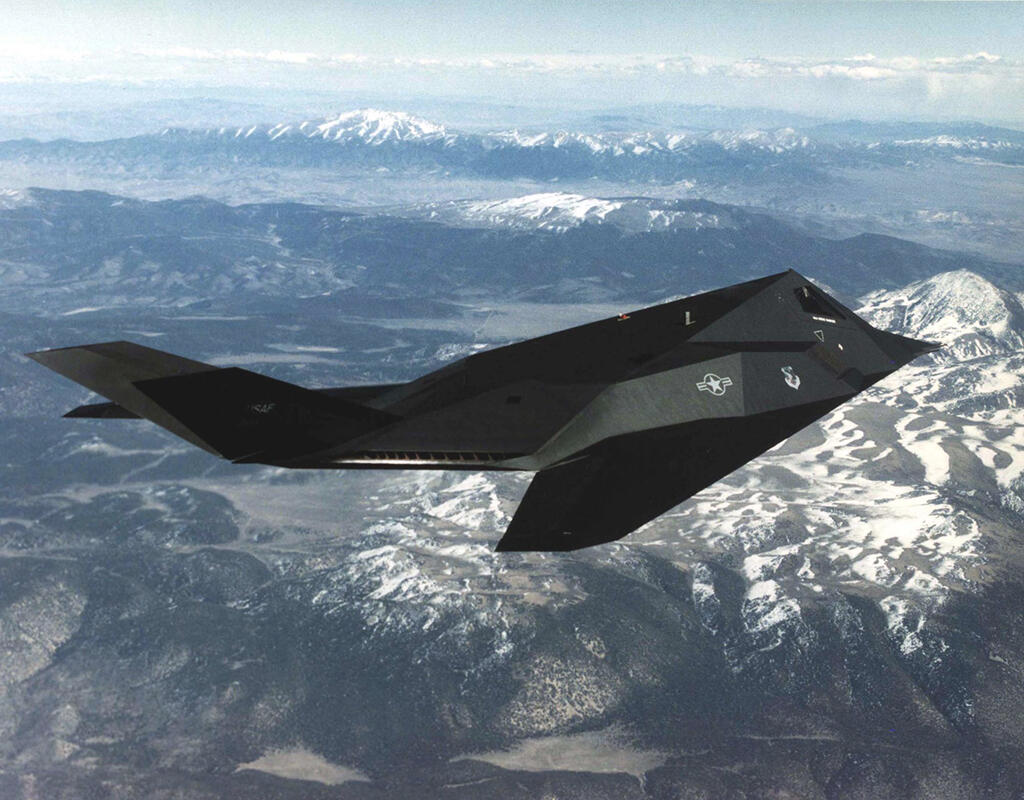
F-117 Nighthawk

Credit: U.S. Defense Department

The F-117A Nighthawk was the first U.S. aircraft to use low-observability as its primary means of survivability. The rear of the aircraft sloped from an apex above the cockpit into a broad, flat feature dubbed the “platypus.” The engine exhaust flattened to thin slots 4-6-in. deep and 5-ft. wide, divided horizontally into about a dozen channels. The lower fuselage terminated in a lip extending 8 in. past the exhaust at a slightly upward angle. This was covered in “heat-reflecting” tiles that were cooled by bypass air from the engines. The platypus shielded the hot metal parts while the flattened plume reduced IR intensity from the side and accelerated mixing with ambient air. The extended lip masked the exhaust slot and first 8 in. of plume from below, while the low-emissivity tiles limited IR absorption and emission.

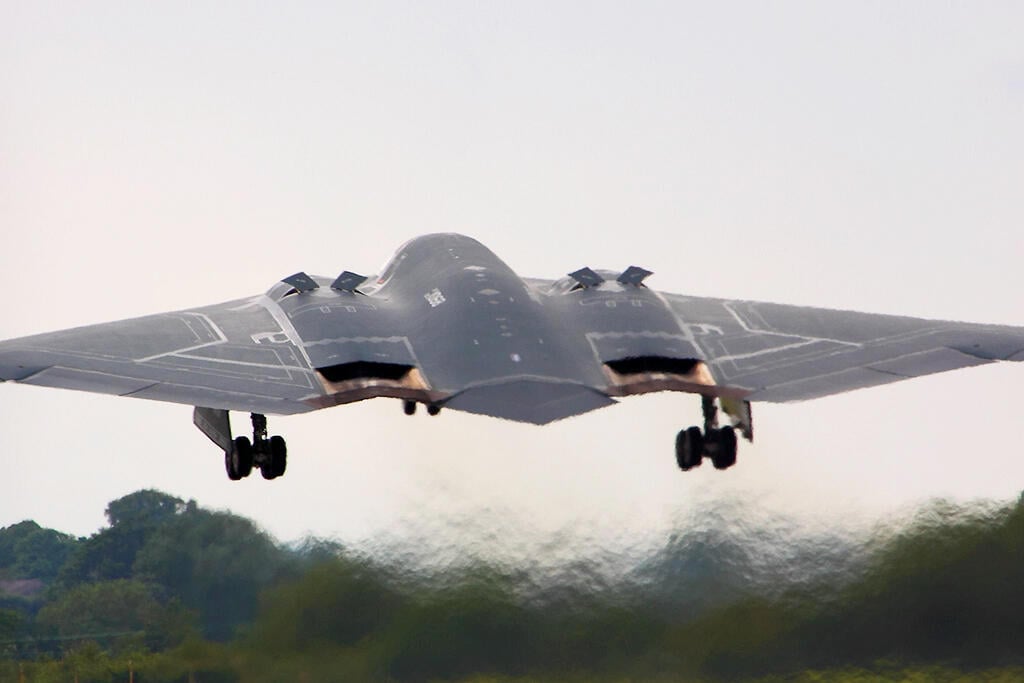
B-2

Credit: Tim Felce

Buried deep within its flying-wing airframe, the B-2’s engines are prevented from heating the outer surface. The exhaust is cooled by bypass air, including from secondary air intakes, and flattened prior to exiting over the “aft deck”—trenches built of titanium and covered in low-emissivity ceramic tiles. Likely containing magnetic radar-absorbent material (RAM), these extend several feet behind the nozzles, blocking the plume’s core from below and the side. Large chevrons at the end of the engine fairings and aft deck also introduce shed vortices to accelerate mixing with ambient air.

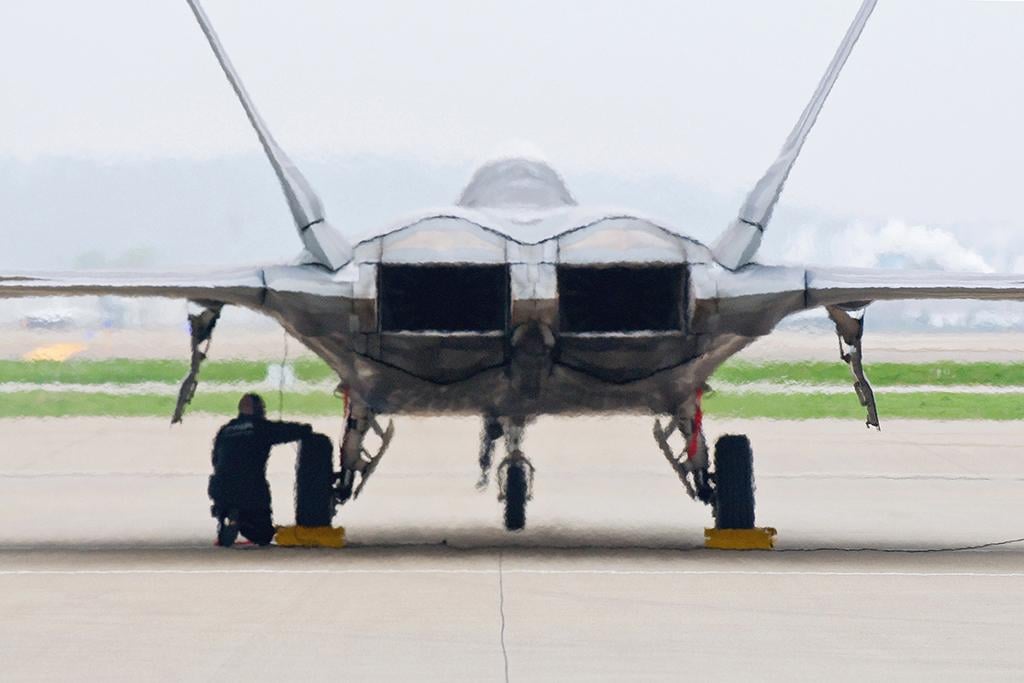
F-22 Raptor

Credit: U.S. Air Force

Pratt & Whitney incorporated a number of IR signature-suppression techniques into the F119 engines that power Lockheed Martin’s F-22 Raptor. Aft of the low-pressure turbine are thick, curved vanes that, when looking up the tailpipe, block any direct view of the hot, rotating turbine components. Fuel injectors are integrated into these vanes, replacing the conventional afterburner spray bars and flame holders. The vanes mask the turbine and contain minute holes that introduce cooler air. The exhaust then passes through the F119’s “non-axisymmetric,” or 2D, thrust-vectoring nozzles, which have upper and lower surfaces ending in wedges with blended central edges. These nozzles further mask the engine hot parts while flattening the exhaust plume and generating vortices. Minute holes are evident on their inner surfaces, likely providing bypass air for enhanced cooling.

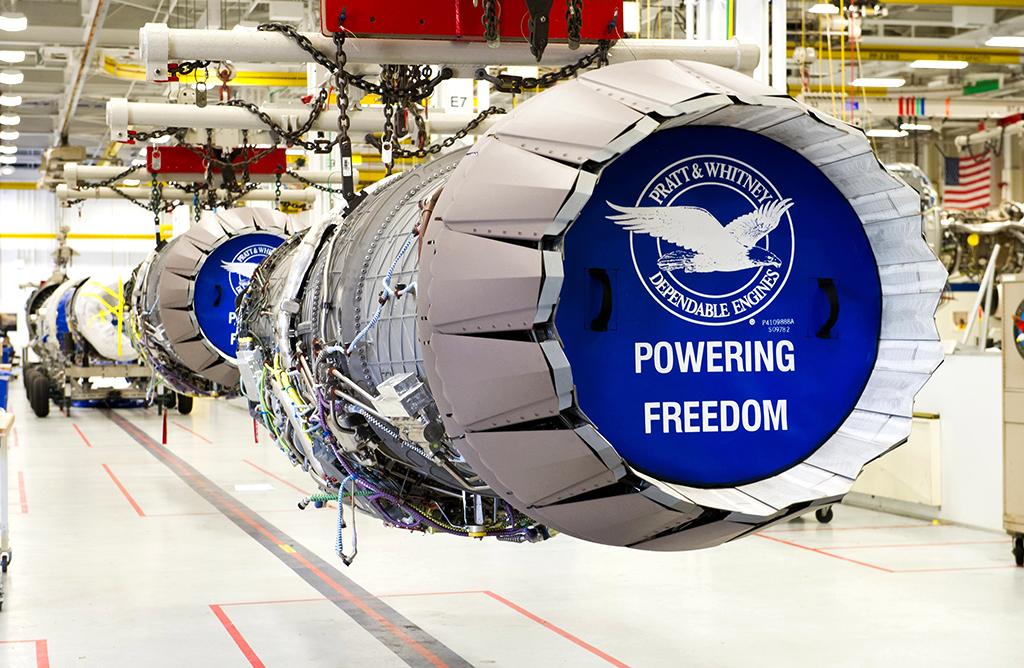
F135 Engine

Credit: Pratt & Whitney

In designing the nozzle of the F135 engine that powers the F-35 Joint Strike Fighter, Pratt & Whitney aimed to rival the low signature of the nozzles on its previous F119, while beating it on maintenance costs. The F135 nozzle comprises two overlapping sets of 15 flaps, offset so outer flaps are centered on the gaps between the inner flaps. The inner flaps are thin, have metallic exteriors and straight sides and terminate in inverted “V”s. The sides create rectangular gaps between them with the nozzle fully diverged. The outer flaps, which Pratt calls “tail feathers,” are thicker and covered in tiles with blended facets. They terminate in chevrons that overlap the ends of the inner flaps to create a sawtooth edge. Toward the fuselage, the tiles end in four chevrons and are covered by additional tiles (not attached to the engines in this photo) that terminate fore and aft in chevrons and interlock with adjacent tiles in sawtooth-fashion.

The F135 nozzle likely suppresses IR signature using multiple methods. The trailing-edge chevrons create shed vortices, shortening the plume, while their steeper axial angle likely directs cooler ambient air into the exhaust flowpath. The inner surfaces of both sets of flaps are white and covered in minute holes similar to those on the F119, which might supply cooling air. The space between the tail feathers and the trailing chevrons may also contain ejectors to provide even more cooling air. The tiles and inner flap surfaces are likely composed of low-emissivity, RAM composites.

Previous
Next

Improvements in infrared (IR) detection technology have made it possible for IR search-and-track systems and IR-guided missiles to acquire aircraft at increasingly long distances. The technology poses a growing threat to aircraft that only suppress their radar signatures. Therefore, in State of Stealth, Part 5, Aviation Week takes a deep dive into the IR side of low-observability. Among the most important factors in limiting an aircraft’s IR detectability is addressing the large signatures created by the engines’ hot part, nozzles and exhaust plumes. In this gallery, we examine the approaches to reducing engine and plume IR signatures that have been taken on the F-117, B-2, F-22 and F-35.

See A Closer Look at Stealth Galleries: Parts 1 & 2, Part 3 and Part 4

Read the State of Stealth series:

Part 7: The Future Of Survivability

Part 6: From Hopeless Diamonds To Cranked Kites

Part 5: The Physics and Techniques of Infrared Stealth

Part 4: State Of Counterstealth Technology On Display At Airshow China

Part 3: The 'Magic' Behind Radar-Absorbing Materials For Stealthy Aircraft

Part 2: Measuring Stealth Technology’s Performance

Part 1: Physics And Progress Of Low-Frequency Counterstealth Technology

Aviation Week Intelligence Network
Monitor the market and connect your business to the people, programs and proprietary data driving the Aerospace & Defense market - only available with AWIN.

ASD_AWIN_thumbnail_270

Stay Connected.
Stay Informed
Grow Your Business.

Learn How

Follow us on

Markets

  • Aerospace
  • Air Transport
  • MRO
  • Defense
  • Space
  • Business Aviation

Products

  • AWIN Intelligence Bundles
  • Market Briefings
  • Publications
  • Data Services
  • Directories
  • Resources

Contact Us

  • Subscriber Services
  • Advertising, Marketing Services & List Rentals
  • Content Sales
  • Events
  • PR & Communications
  • Content Licensing and Reprints
  • FAQ

Other Resources

  • Aviation Week Marketplace
  • Knowledge Center
  • Newsletters
  • ShowNews
  • Advertising - Media Kits
  • Japanese 日本語
  • Korean 한국인
Copyright © 2025. All rights reserved. Informa Markets, a trading division of Informa PLC.
  • Accessibility
  • Privacy Policy
  • Cookie Policy
  • Terms of Use