System-Level Sealing Is Redefining Next-Gen Aircraft

Sealing the Next Generation of Flight: Why System-Level Integration Is Redefining Aerospace Sealing Requirements
By CDI-Hallite Aerospace
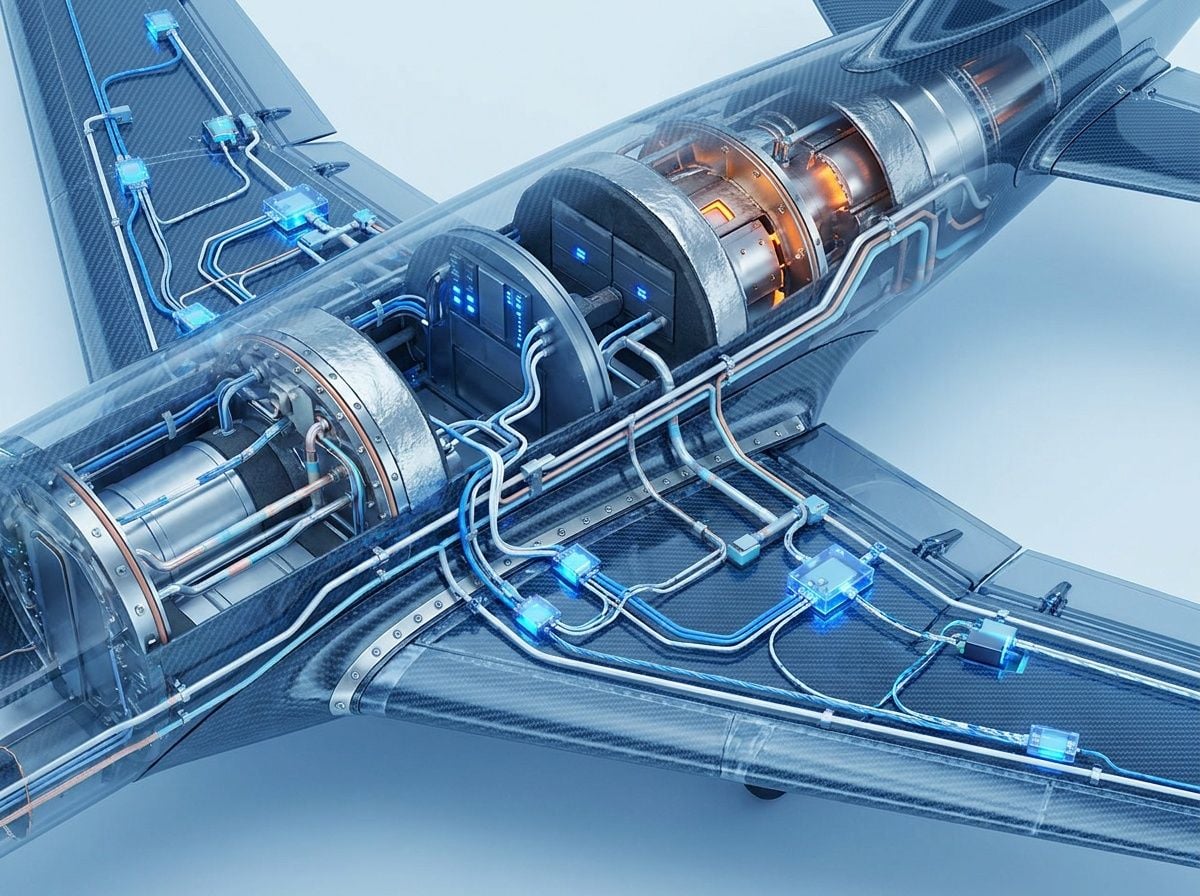
As aerospace platforms evolve, so do the assumptions that underpin their design. The industry’s shift toward more-electric systems, alternative fuels, and increasingly compact architectures is reshaping how engineers think about performance, reliability, and integration.
Within this transformation, sealing—long treated as a component-level decision—is emerging as a system-level design constraint.
In next-generation aircraft, sealing performance is no longer determined solely by pressure ratings or material compatibility. It is defined by how sealing solutions interact with the broader system: its motion profile, its fluid environment, its temperature gradients, and its long-term operational demands.
From Component Selection to System Integration
Traditional aircraft architectures allowed sealing solutions to be specified relatively late in the design process. Hydraulic systems were well understood, fluid types were consistent, and system geometries followed predictable patterns.
That paradigm is changing.
More-electric aircraft architectures are reducing dependence on centralized hydraulics, introducing distributed actuation systems, and increasing power density within smaller envelopes. At the same time, sustainability initiatives are driving the adoption of new fuel formulations, including sustainable aviation fuels (SAFs), which can present different chemical profiles compared to conventional fuels.
These shifts mean that sealing solutions must be considered earlier—and more holistically—within system design.
Seals are no longer isolated components. They are part of an interconnected system in which performance is influenced by:
- Actuation method (hydraulic, electrohydraulic, or electromechanical)
- Fluid chemistry and variability
- Thermal expansion across dissimilar materials
- Structural deflection under load
- Motion characteristics, including speed, frequency, and directionality
The result is a more complex design environment where traditional assumptions about sealing performance no longer fully apply.
Emerging Operating Conditions and Failure Mechanisms
While aerospace sealing has always involved challenging environments, next-generation platforms are introducing new combinations of stresses that alter how and why seals fail.
Increased Cycling and Precision Requirements
Electrified and distributed actuation systems often operate at higher cycling frequencies and tighter control tolerances. This places greater emphasis on friction stability and consistent dynamic response over time.
Sealing elements must maintain low and predictable friction coefficients across extended lifecycles, avoiding issues such as stick-slip, hysteresis, or performance drift that can affect system responsiveness.
Thermal Gradients in Compact Architectures
As systems become more compact, thermal gradients can become more pronounced. Adjacent components may operate at significantly different temperatures, introducing differential expansion that affects sealing interfaces.
In these environments, dimensional stability and material compatibility become critical—not only for leakage prevention, but for maintaining consistent contact geometry under changing conditions.
Fluid Evolution and Material Compatibility
SAFs are designed as “drop-in” replacements for conventional fuels, but variations in composition—depending on feedstock and blend ratio, including differences in aromatic content—can influence material behavior over time.
Similarly, shifts in hydraulic fluid formulations or the use of specialized lubricants in electrified systems may introduce compatibility considerations that differ from legacy platforms.
These variables reinforce the importance of rigorous material testing and validation, particularly for elastomers and thermoplastics exposed to long-term chemical interaction.
Lightweighting and Reduced Design Margins
Weight reduction remains a core priority across all aerospace platforms. However, lighter structures often mean reduced tolerance for misalignment, deformation, or surface irregularities.
Sealing solutions must perform reliably within tighter mechanical envelopes, where even small variations in clearance, surface finish, or load distribution can influence performance.
The Integration Imperative
In this evolving landscape, sealing performance cannot be addressed in isolation. It must be integrated into system design from the outset.
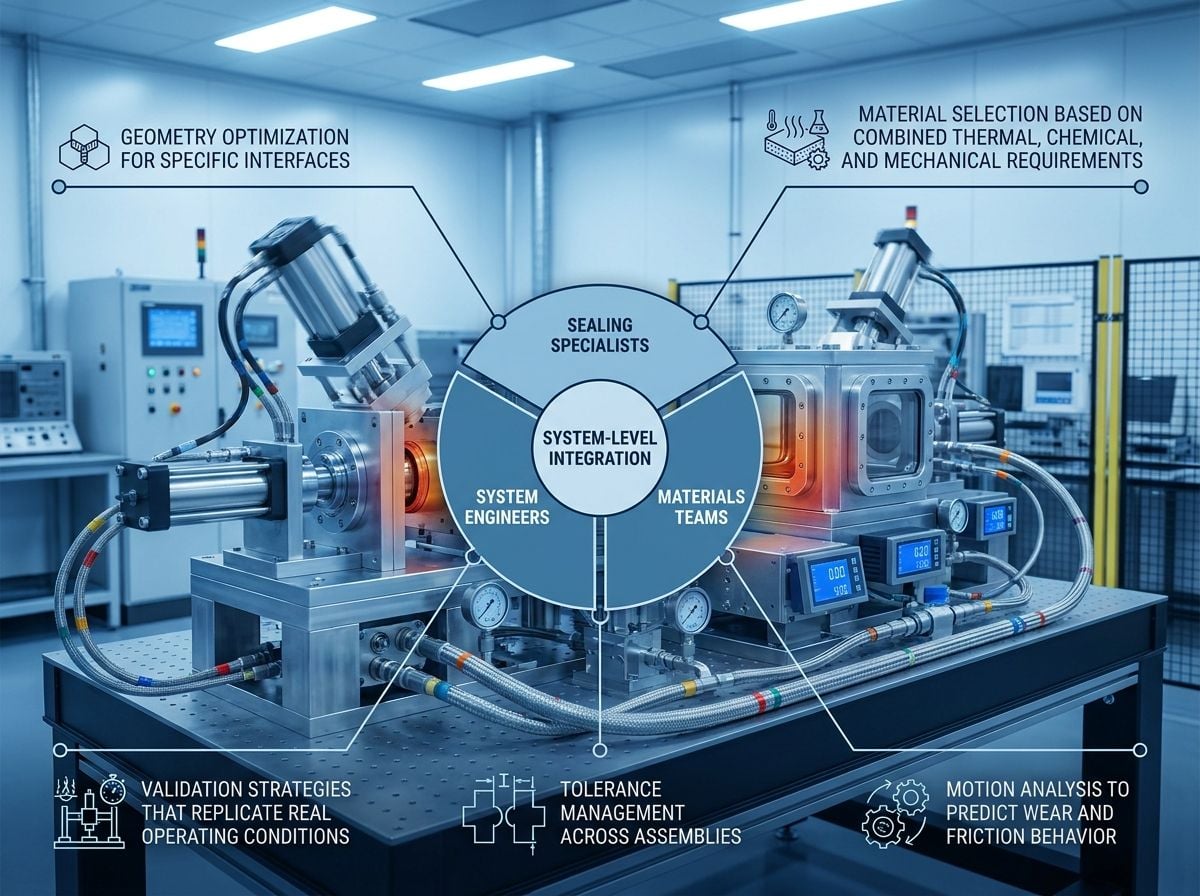
This integration requires close collaboration between sealing specialists, system engineers, and materials teams to align on:
- Geometry optimization for specific interfaces
- Material selection based on combined thermal, chemical, and mechanical requirements
- Motion analysis to predict wear and friction behavior
- Tolerance management across assemblies
- Validation strategies that replicate real operating conditions
Early engagement enables sealing solutions to be tailored to the application, rather than adapted to it.
This shift also highlights the importance of vertically integrated capabilities, where material development, design engineering, manufacturing, and testing are aligned. Such integration supports faster iteration, more accurate validation, and greater confidence in long-term performance. It is a model CDI-Hallite Aerospace was built around, bringing these disciplines under one roof so that sealing strategy is engineered with the system rather than fitted to it.
Evolving Material and Design Considerations
Advanced materials remain central to aerospace sealing, but their role is evolving.
High-performance thermoplastics such as PTFE and PEEK, along with engineered composites, continue to offer advantages in temperature resistance, chemical stability, and friction performance. However, their selection is increasingly driven by system-level trade-offs rather than isolated properties.
Engineers must now balance multiple factors simultaneously, including:
- Permeation resistance for small-molecule environments
- Friction consistency across dynamic cycles
- Resistance to thermal cycling and compression set
- Compatibility with evolving fluid chemistries
- Structural support within lightweight assemblies
Similarly, sealing geometries are becoming more application-specific, incorporating features designed to manage pressure gradients, mitigate trapped fluid, and maintain alignment under varying loads.
Validation in a Multi-Variable Environment
Validation is also becoming more complex. Traditional testing approaches often evaluate individual variables—temperature, pressure, or chemical exposure—in isolation. However, next-generation aerospace systems require testing that reflects the interaction of these variables over time.
Effective validation strategies now include:
- Combined thermal and pressure cycling
- Long-duration wear and friction testing
- Fluid immersion under dynamic conditions
- Contamination and cleanliness sensitivity analysis
- System-level simulation and correlation with physical testing
This multi-variable approach helps ensure that sealing solutions perform as intended under real-world conditions, not just controlled environments.
A Defining Factor in Future Aerospace Systems
Seals have always played a critical role in aerospace systems, ensuring fluid integrity, enabling motion, and protecting components from contamination.
What is changing is their strategic importance.
As aircraft architectures become more complex and performance expectations continue to rise, sealing is no longer a background consideration. It directly influences system reliability, maintenance intervals, efficiency, and safety.
For engineers designing the next generation of aerospace platforms, the question is no longer whether a seal can meet a specification. It is whether the sealing strategy is fully integrated into the system itself.
In that sense, sealing is no longer hidden infrastructure.
It is a defining factor in how next-generation aircraft perform.
ABOUT CDI-Hallite Aerospace
CDI‑Hallite Aerospace brings together advanced materials, precision manufacturing, and engineering expertise to deliver sealing solutions for mission-critical aerospace systems. Learn more at CDI-HalliteAerospace.com.