
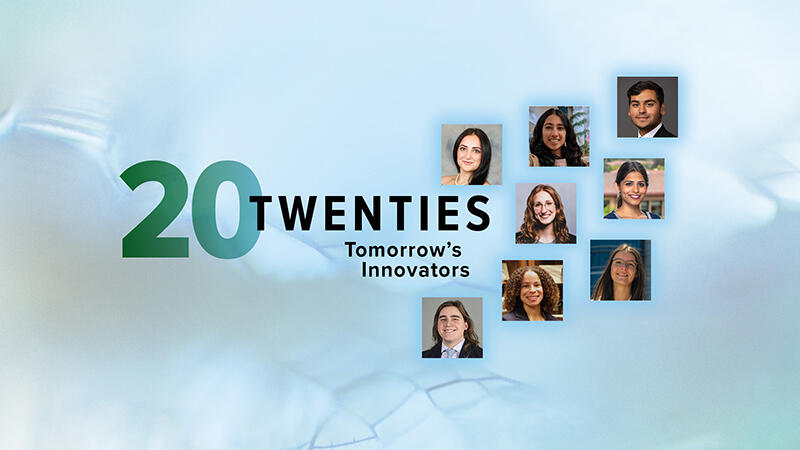
A student at Georgia Tech has cofounded a company developing turbulence suppression systems for regional jets—and has secured contracts for 57 aircraft. At the University of Michigan, another student designed avionics that enabled the school’s first successful rocket launch and recovery this decade. Others are creating biosensors to monitor astronaut health, building algorithms to protect drone swarms from cyberattacks and applying figure skating principles to design boots for walking on icy moons.
These are not speculative senior projects. They are projects addressing today’s operational problems.
This year’s Aviation Week 20 Twenties winners are working at the intersection of immediate needs and long-term challenges. Their research improves prediction models for unstable aerodynamics in defense applications, advances propulsion through computational fluid dynamics and strengthens autonomous flight systems for contested environments.
Some focus on the human dimension: analyzing NTSB crash data to improve safety outcomes, studying astronaut motion sickness mitigation and supporting sustainable space operations. Others are optimizing rocket engine sensors to enable reusability and accelerating satellite reentry predictions through machine learning.
Several students have led multidisciplinary teams, authored peer-reviewed publications and contributed to patent filings. These students are building tools and frameworks others can use to make better decisions.

Matt Nurick, an undergraduate at the University of Michigan who increased his student organization’s membership 1,000% while leading rocket development, reflects this balance. “As engineers, we can only go so far with technical excellence,” he says. “We sought to equip our members with the necessary professional, communication and soft skills for them to be the best version of themselves both in industry and their personal lives.”
That commitment extends beyond campus. Winners have raised $160,000 for mental health awareness and delivered 150,000 protective items to hospitals during the COVID-19 pandemic. They teach science, technology, engineering and/or math at homeless shelters and conduct workshops in their home countries. “Impact doesn’t begin with a job title,” says Spoorti Nanjamma, a graduate student at Embry-Riddle Aeronautical University. “It begins with persistence, purpose and people who believe in your potential and the long arc of growth.”
The diversity of experience here matches the breadth of research. Women comprise 75% of this year’s class. Students bring perspectives from Australia, Belgium, India, Italy, South Africa and Turkey. Many are first-generation college students or international students navigating visa restrictions. One is a Division I athlete balancing elite competition with engineering demands. Setbacks became catalysts for resilience and leadership rather than obstacles.
Winners will be recognized March 19 during the 20 Twenties Awards Luncheon and Aviation Week’s 68th Annual Laureates Awards in Washington. The program is conducted in partnership with Accenture.
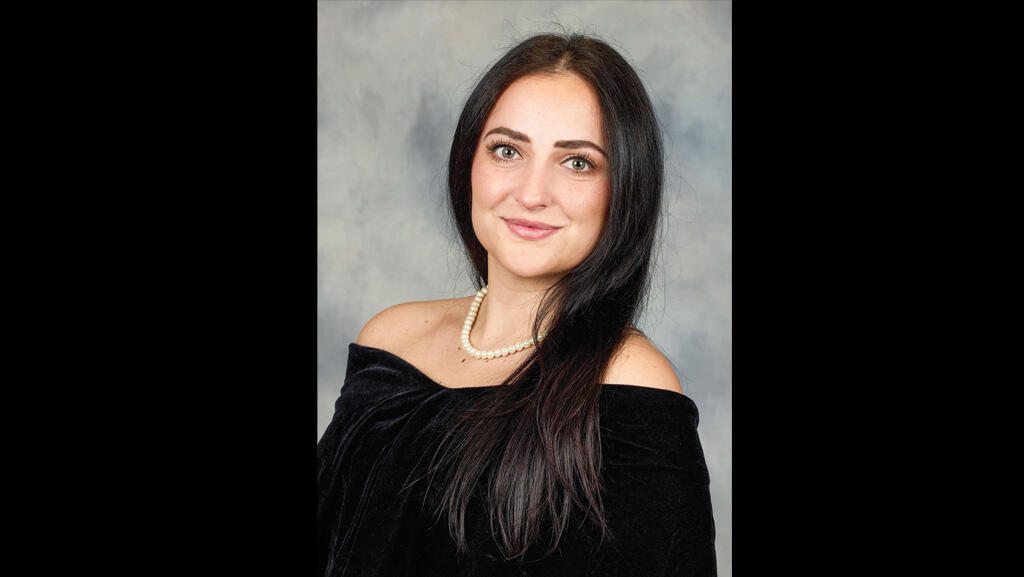
DANIELLA BEZUIDENHOUT • Embry-Riddle Aeronautical University, Graduate Student, Aerospace Engineering • Class of 2026 | B.S., Aerospace Engineering • Class of 2025
Noise levels will determine whether next-generation aviation technologies gain public acceptance. Working on NASA’s University Leadership Initiative, Bezuidenhout develops and validates intermediate fidelity models for predicting broadband rotor noise in urban air mobility vehicles. Her work balances accuracy and computational efficiency, enabling reliable noise prediction at early design stages. By validating computational models against experimental rotor tests conducted at Virginia Tech, she bridges the gap between high-fidelity simulation and practical aircraft design.
Bezuidenhout, an international student from South Africa, served as women’s empowerment lead for Embry-Riddle’s Women’s Ambassadors program. A licensed pilot and former flight-test engineering intern, she plans to pursue a doctorate focused on validation methods that will shape the design of quieter, publicly accepted aircraft.

EMANUELE BOSSI • Embry-Riddle Aeronautical University, Undergraduate Student, Data Science and Software Engineering • Class of 2026
Bossi addresses a critical aerospace challenge: preventing localized failures from cascading into systemwide disruptions. As team lead for the EuroControl Performance Review Commission Data Challenge, he developed an artificial intelligence framework for estimating an aircraft’s actual takeoff weight, a key variable affecting safety margins, fuel efficiency and emission modeling. Competing against 132 international teams, his work placed in the top 25 and was accepted for presentation at the American Institute of Aeronautics and Astronautics’ SciTech Forum 2026. He is now developing an information--theoretic framework for causal network discovery to predict disruption propagation in air traffic management systems.
A first-generation college student from Italy, Bossi competes as a varsity soccer athlete. He founded Embry--Riddle’s Data Science Club and plans to pursue a doctorate in resilient aerospace systems.
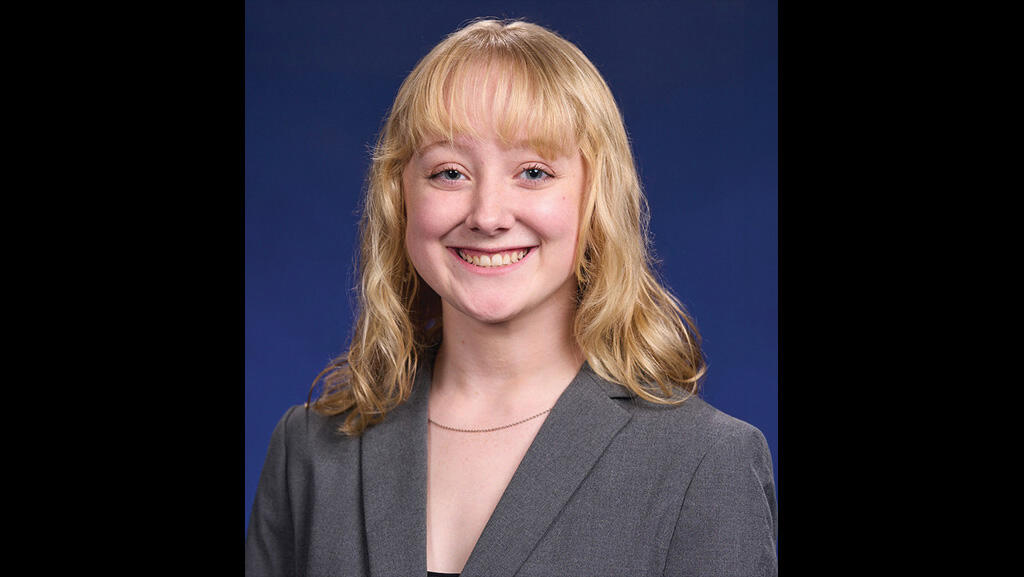
NATALIE BRATTAIN • Embry-Riddle Aeronautical University, Undergraduate Student, Aerospace Physiology • Class of 2026
Protecting astronaut vision is essential for long-duration spaceflight. As principal investigator, Brattain developed a wearable biosensor using self-healing polymers embedded with silver nanowires to monitor intraocular pressure, securing competitive internal research funding. Her work resulted in a published paper demonstrating the potential of self-healing materials for biomedical applications in both spaceflight and defense. She also contributed to studies examining vision-related physiological changes in simulated microgravity and serves as colead of the Tardigrade BioExploration Reproduction Research Satellite, an International Space Station payload mission examining extremophile adaptation to radiation.
A Goldwater Scholar, Brattain supports peer mentorship and undergraduate research initiatives. She plans to pursue a doctorate in bioastronautics, advancing biomedical countermeasures for future exploration missions.
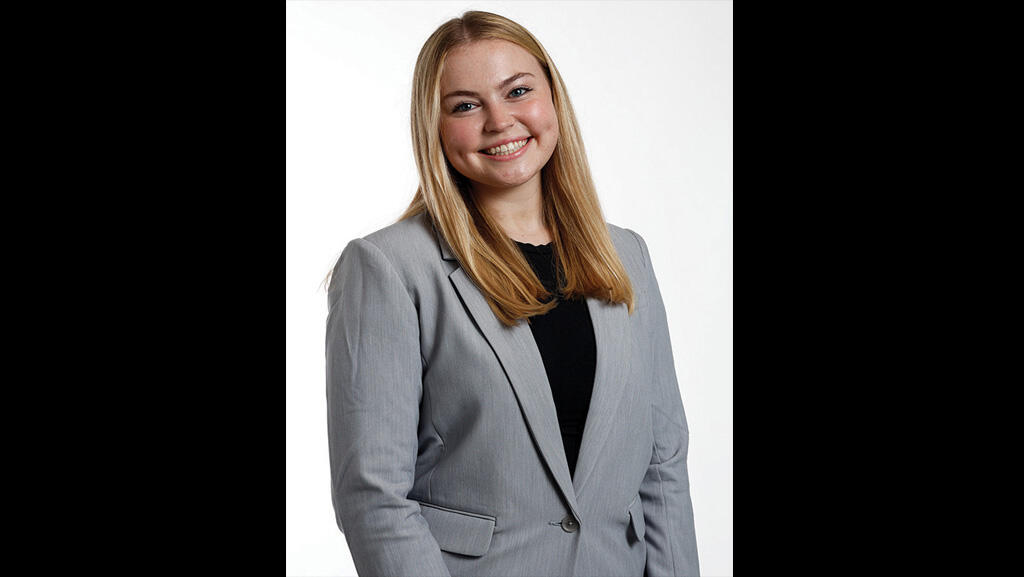
SKYLAR BUTLER • Embry-Riddle Aeronautical University, Undergraduate Student, Astronomy & Astrophysics and Space Physics • Class of 2026
Butler’s research spans planetary science, stellar evolution and space weather. As principal investigator on a student internal grant, she models asteroid disruption dynamics to predict infrared dust band observations. Her work also includes Bayesian stellar age determination using BASE-9 software, particle physics simulations of core collapse supernovae conducted at laboratories affiliated with the European Organization for Nuclear Research (CERN) and analysis of magnetospheric dynamics using NASA mission data. She has presented research at major conferences, including the American Astronomical Society Meeting.
Complementing her academic work, Butler has completed internships at the Johns Hopkins University Applied Physics Laboratory and Lockheed Martin, applying physics-based modeling to defense and aerospace systems. She plans to pursue a doctorate in astrophysics.
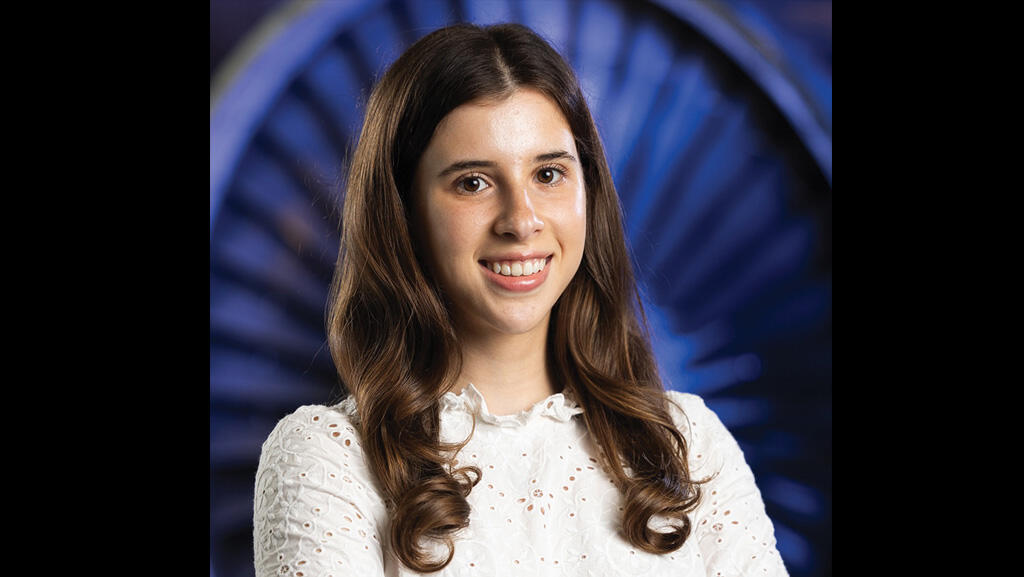
MINA CEZAIRLI • Massachusetts Institute of Technology, M.S., Aeronautics & Astronautics • Class of 2025 | Yale University, B.S., Mechanical Engineering • Class of 2021
Improving aviation sustainability requires operational innovation. At the Massachusetts Institute of Technology’s International Center for Air Transportation, Cezairli quantified the real-world impact of new low-noise flight procedures at Boston Logan International Airport, documenting substantial noise reductions alongside fuel savings. Her master’s thesis examines why aircraft deviate from fuel-optimal cruise trajectories, revealing structural constraints in current airspace design. Her analysis of self-separation concepts using Automatic Dependent Surveillance-Broadcast data earned Best Paper recognition at the Institute of Electrical and Electronics Engineers’ Digital Avionics Systems Conference and demonstrated the potential for substantial industrywide fuel savings.
A licensed pilot, Cezairli plans to pursue doctoral research focused on sustainable and human-centered air traffic systems.
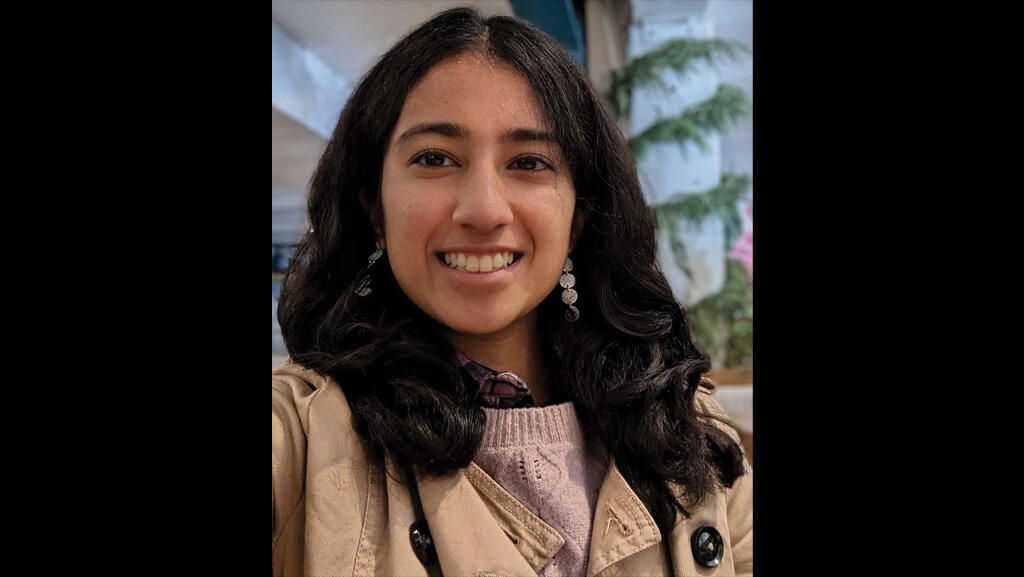
SHREYA CHANDRA • University of California, Davis, Undergraduate Student, Aerospace Science and Engineering and Mechanical Engineering • Class of 2026
Chandra applies human--centered design to challenges in planetary exploration. Drawing on biomechanics and materials research, she developed a novel spacesuit boot concept optimized for traction and stability on icy extraterrestrial surfaces. Her prototype work, supported by competitive space grant funding, addresses mobility constraints for future missions to icy moons and asteroids. Chandra also has presented research on radiation shielding systems at the American Institute of Aeronautics and Astronautics’ SciTech Forum and contributed to mission design and spacecraft systems research through multiple aerospace internships.
She cofounded her university’s first space-focused student organization and plans to pursue a career advancing human exploration systems.
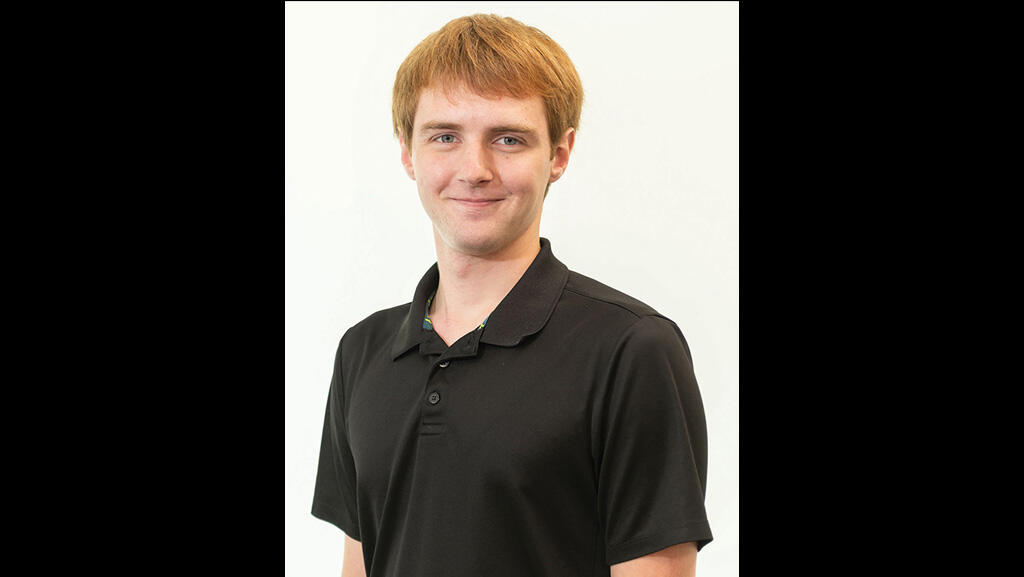
TANNER CHASE • Utah State University Graduate Student, Electrical Engineering • Class of 2027 | Undergraduate Student, Computer Engineering • Class of 2026
Chase leads autonomy research for uncrewed aerial systems at the Space Dynamics Laboratory, a Defense Department University Affiliated Research Center. His work focuses on model predictive control, sensor fusion and computer vision for resource-constrained embedded platforms, enabling precise onboard autonomy. Leading multidisciplinary teams, he has guided projects from algorithm development through custom hardware design and flight testing, directly supporting uncrewed aircraft systems (UAS) and counter-UAS programs.
He balances advanced research with community service through amateur radio emergency communications. Chase is pursuing graduate studies in electrical engineering, focusing on autonomous aerospace systems.
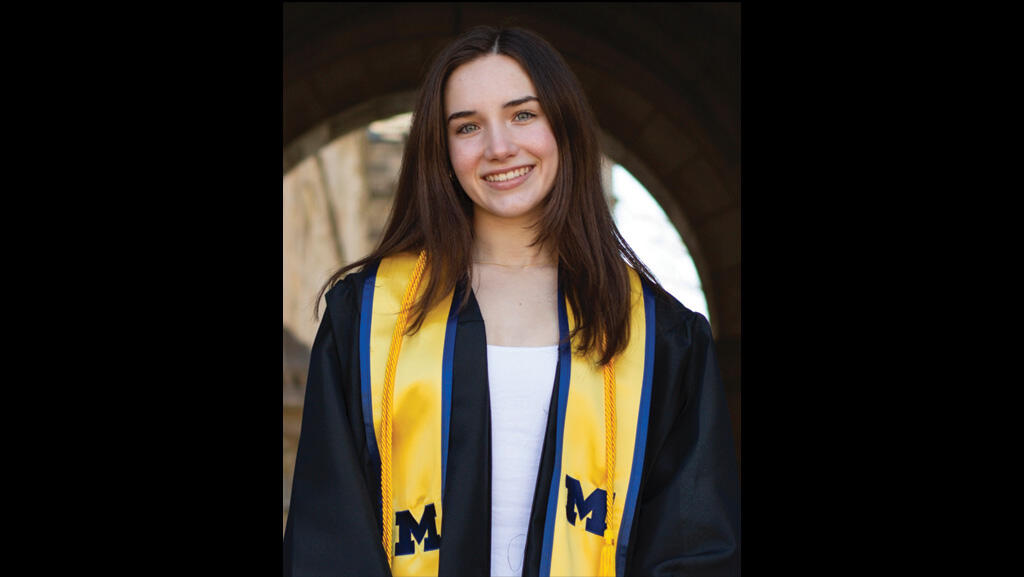
LILLIAN CROGHAN • University of Michigan M.S.E., Aerospace Engineering • Class of 2025 | B.S.E., Aerospace Engineering • Class of 2024
Croghan advances propulsion modeling for space applications. She developed a Method of Characteristics solver for pulse detonation engine cycles, deriving new boundary conditions that revealed previously unmodeled shock behavior. Her work represents a novel contribution to partial differential equation-based propulsion analysis. As a graduate instructor for Michigan’s Model-Based Systems Engineering courses, she managed rapid enrollment growth while maintaining instructional quality. Her earlier team’s Blue Origin payload flew successfully twice, exceeding performance targets.
Croghan has accepted a position in GE Aerospace’s Edison Engineering Development Program with full doctoral sponsorship, where she will continue work at the intersection of propulsion and systems engineering.
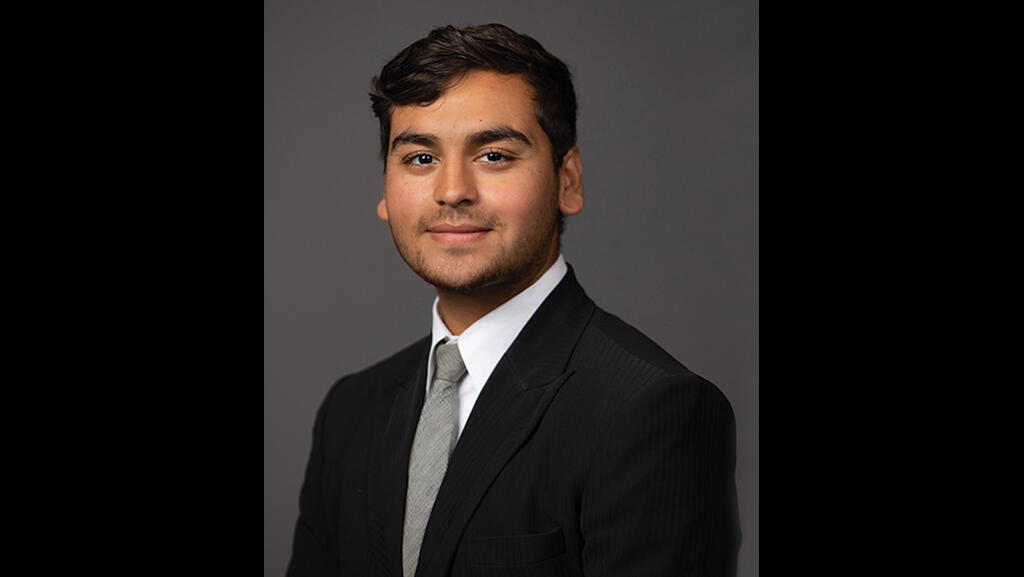
MAAZ DOSSA • Georgia Institute of Technology, Undergraduate Student, Aerospace Engineering • Class of 2026
Dossa cofounded Endeavor Elements to develop a turbulence suppression system for regional jets, securing substantial pre-seed funding and a commercial contract covering more than 50 aircraft. He designed a real-time control stack integrating Doppler lidar and model predictive control while addressing FAA certification constraints. At Georgia Tech, he conducts research in autonomous control, applying reinforcement learning and stochastic optimization to aerial and legged systems.
A first-generation international college student from India, Dossa was a Boeing fleet structures engineering intern at Delta TechOps. He also founded Georgia Tech’s Supersonics Club, which grew to more than 200 members in two years. He plans to pursue advanced research in autonomous aerospace systems.
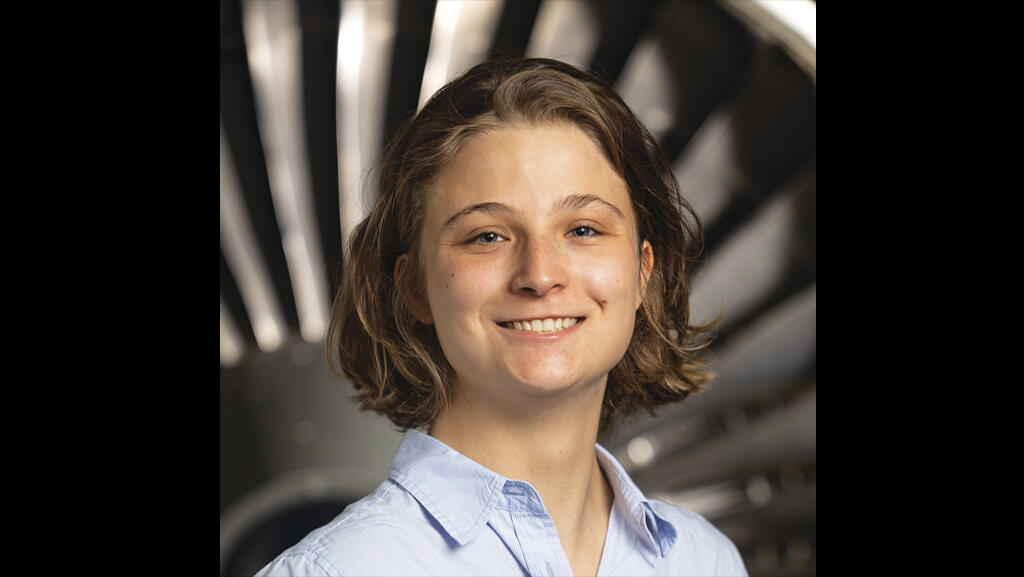
LILLY ETZENBACH • Massachusetts Institute of Technology, Graduate Student, Astronautics • Class of 2026 | University of California, Berkeley, B.S., Mechanical Engineering • Class of 2024
Etzenbach’s research addresses a central challenge in reusable launch systems: reducing refurbishment cost without sacrificing reliability. Her master’s thesis develops an analytical framework integrating engine subsystem performance, vehicle-level trade studies and cost modeling to optimize reuse strategies for liquid propellant rocket engines. Her award-winning paper introduces sensor placement algorithms enabling nonintrusive health monitoring and predictive maintenance, demonstrating that calibrated refurbishment approaches can extend engine life. At MaiaSpace, Europe’s first reusable launcher company, she defined recovery flight sequences, failure analyses and attitude control systems.
Etzenbach joined Berkeley’s rocketry team as one of four women among 50 members and later became its first female president, growing participation fourfold. She plans to continue advancing reusability-focused systems engineering in launch vehicles.

ABIGAIL FRANK • Purdue University, Undergraduate Student, Aeronautical and Astronautical Engineering • Class of 2026
Frank leads large-scale student rocket development as project manager for Purdue Space Program’s High Altitude rocketry team. Under her leadership, the team achieved Purdue’s first undergraduate-designed two-stage rocket and increased launch cadence substantially. Her team placed among the top universities at a national competition and completed all planned launches and recoveries. She established structured onboarding programs training dozens of new engineers and regularly represents student aerospace teams to industry audiences.
A Brooke Owens Fellow, Frank combines technical leadership with cultural change—transforming team structure, onboarding and accountability while advocating for safer, more human-centered approaches to aerospace systems. She plans to pursue a career focused on aviation safety and human factors.
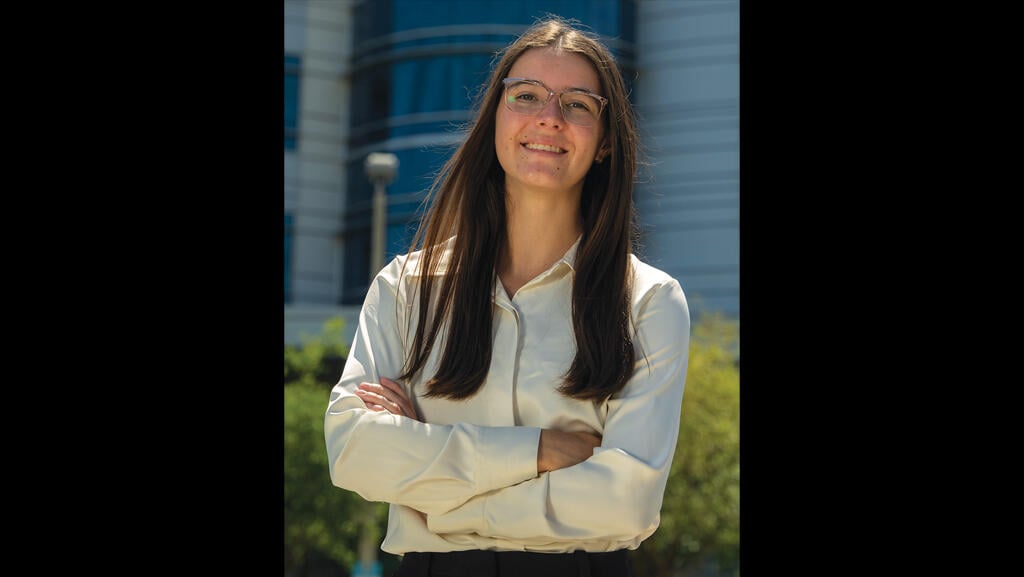
GRACE GRATTON • Embry-Riddle Aeronautical University, Undergraduate Student, Space Physics • Class of 2027
Gratton develops resilient consensus algorithms for autonomous drone swarms operating in contested environments. Her biologically inspired Synchronous Hatching Consensus Algorithm enables coordination even when agents are compromised. Her work has resulted in first-author publications, a filed patent and ongoing validation on physical platforms. A Goldwater Scholar, she completed a heliophysics internship at the Air Force Research Laboratory analyzing solar wind predictions to protect critical space assets.
After being steered away from technical roles early in her education, Gratton proved capability through execution—leading design teams, mentoring peers and translating theory into working systems rather than argument. She plans to pursue doctoral research in autonomous and space systems.
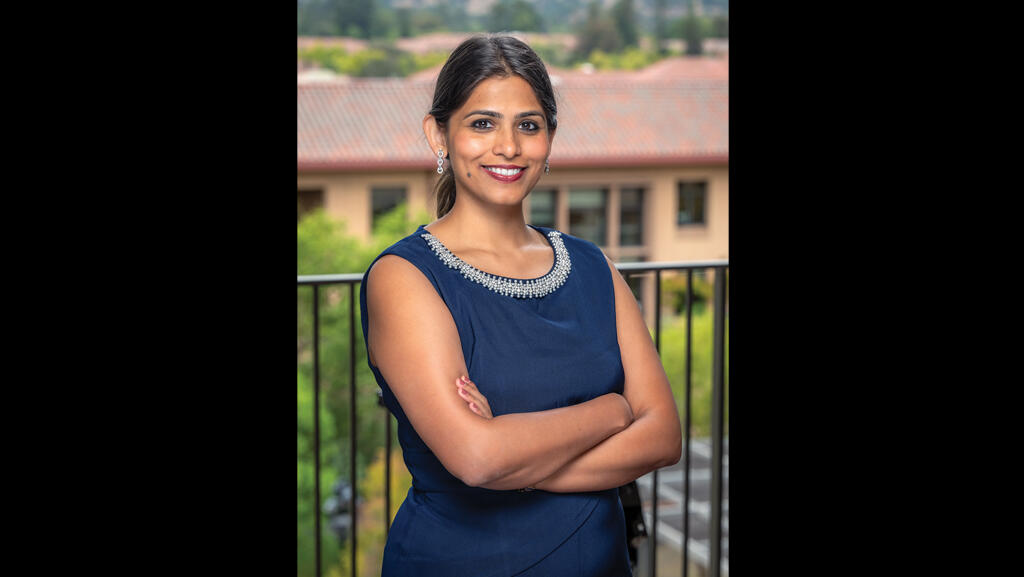
NISHIGANDHA KELKAR • Stanford University, Graduate Student, STEM M.B.A. • Class of 2026 | Embry-Riddle Aeronautical University, M.S., Management Science • Class of 2021 | B.S., Aerospace Engineering • Class of 2017
Kelkar integrates aerospace engineering and business strategy to advance emergency medical access through advanced air mobility. As a product manager at Joby Aviation, she developed long-term product road maps supporting scalable electric aircraft deployment. At Garmin, she managed multimillion--dollar electric vertical-takeoff-and-landing flight deck programs and helped define electric aviation strategy. At Stanford, she founded and teaches the university’s first advanced air mobility course while conducting aerospace safety research using large-scale accident data.
Motivated by firsthand experience with delayed emergency care, Kelkar focuses on aerospace systems that move quickly from innovation to measurable public support. She plans to continue shaping policy--informed aerospace systems.
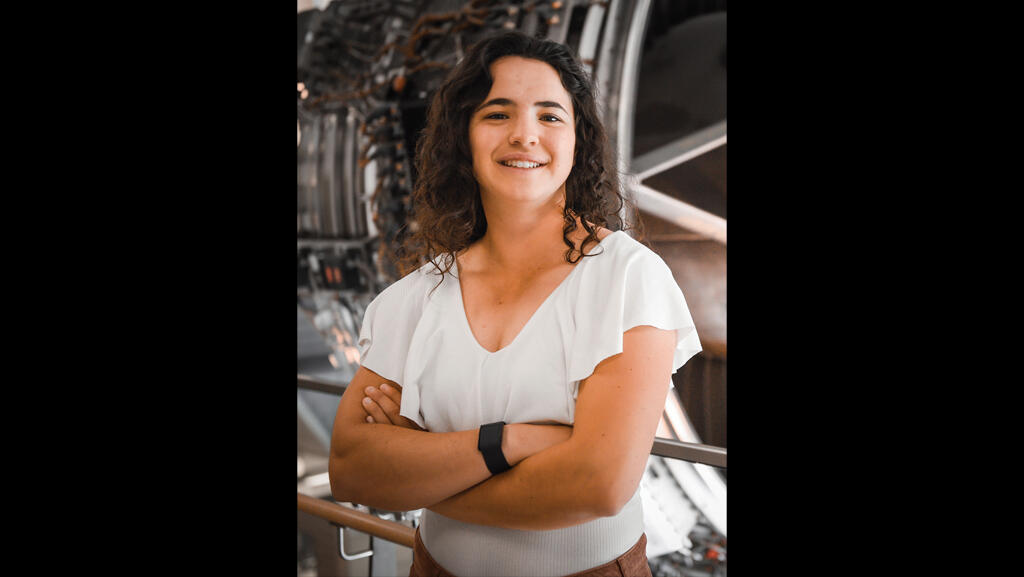
KATHERINE LEMKE • Virginia Tech, Undergraduate Student, Aerospace Engineering • Class of 2026
Lemke advances sustainable and applied aerospace design through propulsion and autonomous systems research. At Rolls-Royce, she supported hydrogen demonstrator engine development through trade studies and test integration. Her agricultural drone project replaced heavy machinery with fixed-wing electric vertical-takeoff-and-landing systems for targeted crop treatment, reducing environmental effects. As a senior design leader, she directs a multidisciplinary team developing an advanced firefighting aircraft system.
A Division I golfer who transferred schools to pursue engineering, Lemke brings discipline from elite athletics to complex technical leadership and mentorship of fellow engineer-athletes through the university’s Student--Athlete Advisory Committee. She plans to pursue a career in sustainable aviation technology.
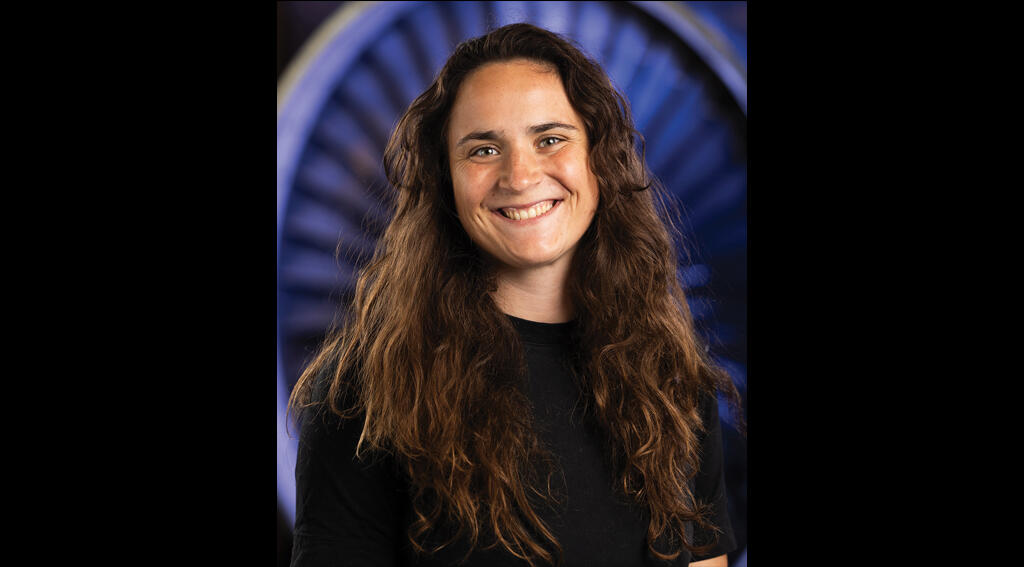
JEANNE LONGLUNE • Technical University of Denmark (DTU), M.Sc., Earth and Space Physics and Engineering • Class of 2025 | Free University of Brussels B.S., Engineering Sciences • Class of 2023
Longlune develops machine-learning models that accelerate satellite reentry prediction while preserving physical accuracy. Working across DTU, Aalto University and the Massachusetts Institute of Technology, she created surrogate models enabling rapid assessment of thousands of reentry scenarios and supporting design-for-demise strategies. Her visualization tools inform engineering design and regulatory decision-making related to orbital debris mitigation.
A first-generation college student from a farming family in Belgium, Longlune brings a pragmatic perspective to research spanning multiple nations and institutions. She cofounded two nonprofit initiatives in Belgium during the COVID-19 pandemic to provide protective materials to hospitals and care centers. She plans to continue advancing space safety and sustainability.
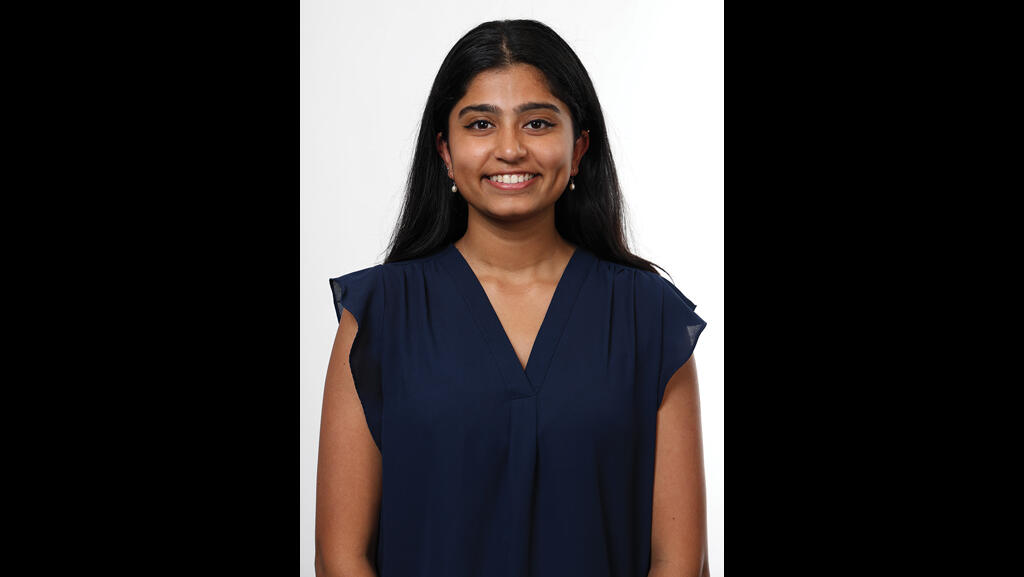
SPOORTI NANJAMMA • Embry-Riddle Aeronautical University, Graduate Student, Systems Engineering • Class of 2026 | B.S., Spaceflight Operations • Class of 2023
Nanjamma applies biologically inspired design to satellite systems constrained by size, weight and power limits. Her master’s thesis develops traceable frameworks translating biological strategies into implementable subsystem concepts. As requirements engineer for an Air Force Research Laboratory CubeSat mission, she leads development of hundreds of mission and subsystem requirements. Her work at the FAA NextGen Test Bed supports advanced airspace management initiatives.
Raised in rural India and educated across continents, Nanjamma pairs systems rigor with a commitment to mentoring students who lack early access to aerospace pathways. She plans to advance creative yet rigorous systems engineering methodologies.
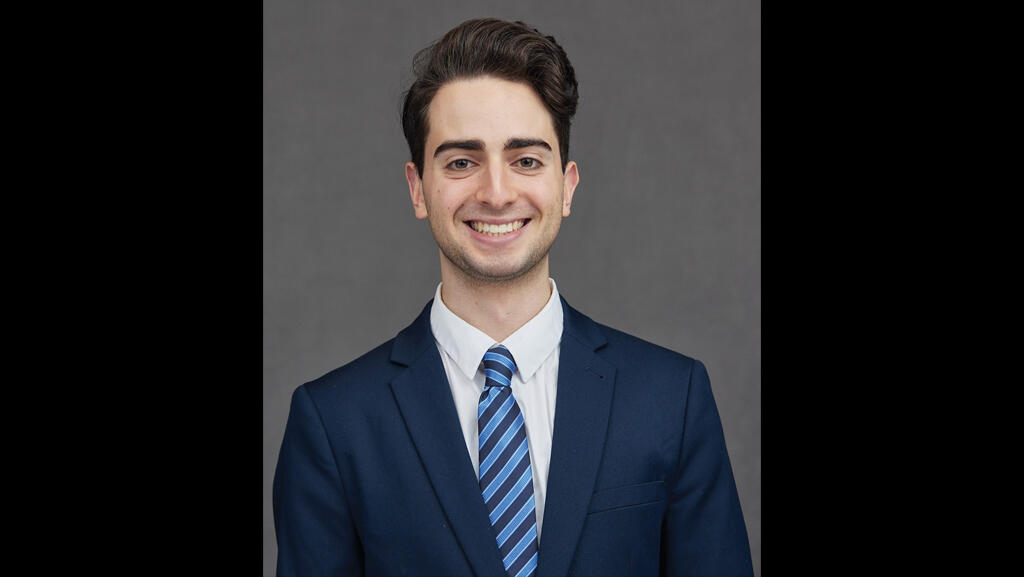
MATT NURICK • University of Michigan, Undergraduate Student, Aerospace Engineering • Class of 2026
Nurick led avionics development for the University of Michigan’s first successful rocket launch and recovery this decade. As sole avionics engineer, he architected system requirements, designed a custom flight computer and developed telemetry systems. As a launch engineering intern at SpaceX, he improved GPS calibration systems with substantial reductions in cost, mass and processing time.
Alongside his technical work, Nurick leads large-scale student outreach and aerospace programming, reflecting a long-standing commitment to engineering leadership beyond the lab. As president of the university’s American Institute of Aeronautics and Astronautics student branch, he coordinated more than 40 events for the engineering community and helped grow active membership by 1,000%. He plans to pursue advanced research in aerospace systems engineering.
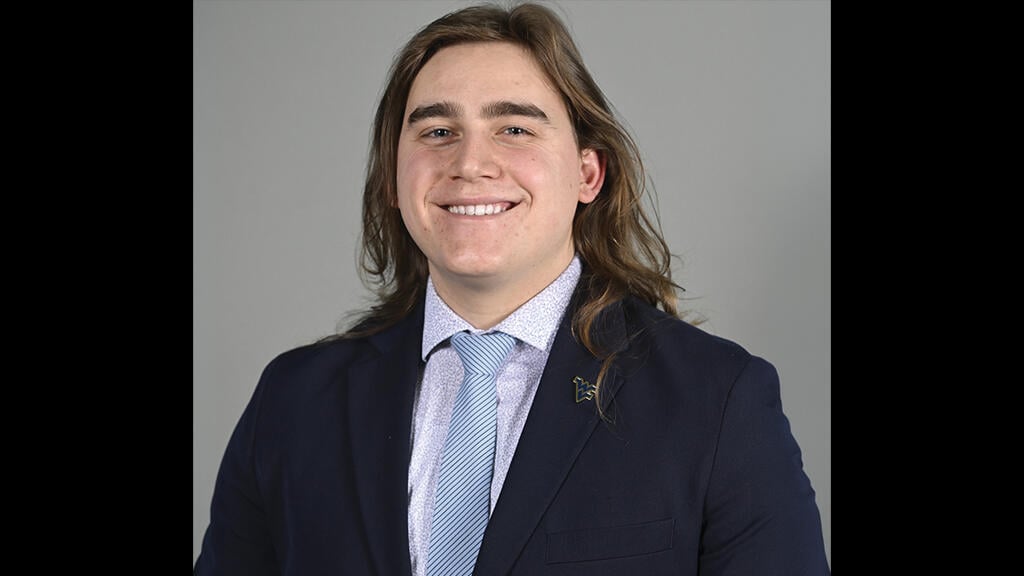
NOAH C. PARSONS • West Virginia University, Graduate Student, Aerospace Engineering • Class of 2026 | B.S., Aerospace Engineering • Class of 2025
Parsons advances understanding of fully unstable aerodynamic bodies relevant to defense systems. He leads experimental flight testing for a U.S. Navy-funded program examining tumbling dynamics under varying mass and inertia conditions. His work integrates neural networks, computational fluid dynamics and validated six-degree-of-freedom models. He is a lead author on multiple American Institute of Aeronautics and Astronautics submissions.
Originally from a community with limited exposure to aerospace engineering, Parsons now mentors undergraduates and builds programs that expand access to technical education. He founded and served as treasurer for West Virginia University’s Design, Build, Fly Club, and he launched a youth programming series focused on aeronautical and aerospace engineering in his hometown.
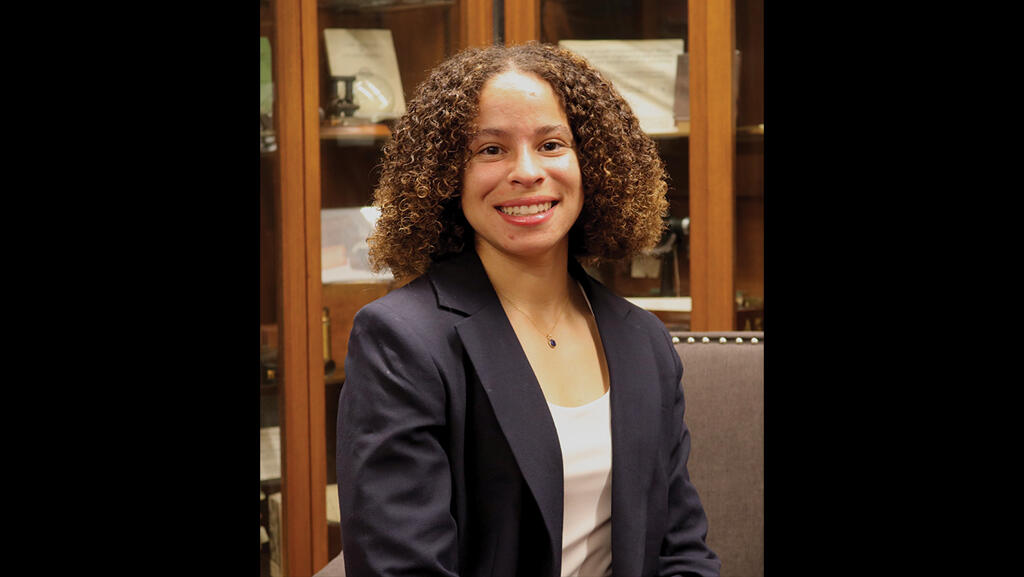
ANDREA SILVA • Case Western Reserve University, Undergraduate Student, Mechanical and Aerospace Engineering • Class of 2026
Silva conducts computational fluid dynamics analysis of hypergolic rocket injector designs supported by NASA Space Grant funding. Using advanced simulation tools, she evaluates bipropellant injector performance and develops educational resources linking design iteration to engine behavior. Her work builds on internships at Aerojet Rocketdyne supporting NASA’s Mars Sample Retrieval Lander program.
As president of her university’s rocket team, Silva pairs propulsion research with hands-on education, building early entry points into aerospace engineering for younger students.
Under her leadership, the team created a platform for high schoolers to pursue National Association of Rocketry certifications.

PRIYANKA VASU • University of Colorado Boulder, Graduate Student, Aerospace Engineering Sciences • Class of 2026 | Anna University, Bachelor of Engineering, Aeronautical Engineering • Class of 2023
Vasu develops nonpharmaceutical countermeasures for astronaut motion sickness during critical landing operations. Funded by NASA’s Human Research Program, her work evaluates visual and anticipatory cues using motion platforms and virtual reality systems. As lead graduate research assistant at BioServe Space Technologies, she supports hardware development for payloads for NASA’s Lunar Gateway through analysis, testing and integration.
Grounded in both research and service, Vasu centers her work on protecting human performance during the most operationally demanding phases of spaceflight. She plans to advance human-centered engineering solutions for future exploration missions.
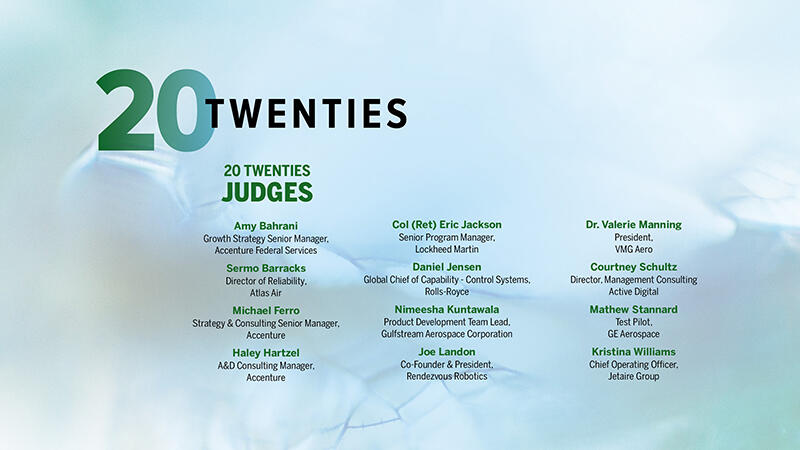
Amy Bahrani, Growth Strategy Senior Manager, Accenture Federal Services
Sermo Barracks, Director of Reliability, Atlas Air
Michael Ferro, Strategy & Consulting Senior Manager, Accenture
Haley Hartzel, A&D Consulting Manager, Accenture
Col. (Ret.) Eric Jackson, Senior Program Manager, Lockheed Martin
Daniel Jensen, Global Chief of Capability – Control Systems, Rolls-Royce
Nimeesha Kuntawala, Product Development Team Lead, Gulfstream Aerospace
Joe Landon, Cofounder & President, Rendezvous Robotics
Valerie Manning, President, VMG Aero
Courtney Schultz, Director, Management Consulting, Active Digital
Mathew Stannard, Test Pilot, GE Aerospace
Kristina Williams, Chief Operating Officer, Jetaire Group
Now in its 12th year, Aviation Week’s 20 Twenties program identifies these rising contributors through collaboration with universities worldwide. Twenty exceptional undergraduate and graduate students are selected annually based on their work on aerospace and defense’s most pressing challenges. Engineers and hiring managers evaluate academic performance, civic contribution, obstacles overcome and research value. This year’s class signals where the industry is headed—and who will shape it.