This article is published in Business Aviation & AAM Report part of Aviation Week Intelligence Network (AWIN), and is complimentary through Nov 05, 2026. For information on becoming an AWIN Member to access more content like this, click here.
DBT Aero Explores Ducted-Fan Propulsion Partnership With MagLev Aero
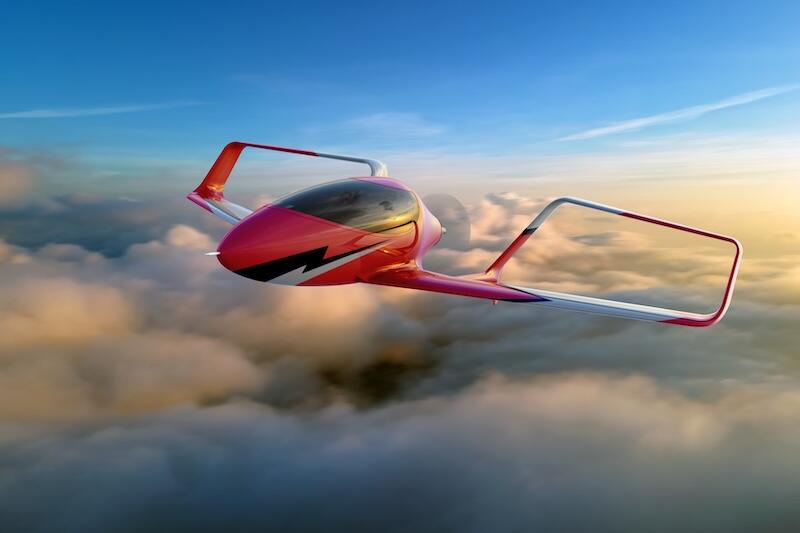
DBT Aero's 2XL two-seat light aircraft will be powered by a Rotax piston aeroengine.
DBT Aero has signed an agreement to evaluate integrating MagLev Aero’s HyperDrive rim-driven electric ducted-fan propulsion system with the company’s laminar-flow airframe.
Utah-based DBT Aero is developing aircraft that combine a unique Double Box Tail (DBT) configuration with natural laminar flow and integrated propulsion, beginning with a two-seater, the 2LX, designed to comply with the FAA’s new Part 22 rules for light sport aircraft.
The startup was founded in 2019 to commercialize the DBT configuration after acquiring the intellectual property from its inventor, Synergy Aircraft, says founder Michael Duke.
The DBT is not a box wing, where two wings are joined at the tips. Instead, Duke describes the configuration as taking a conventional T-tail, cutting it down the middle and sliding the two halves outward until the horizontal stabilizers connect to the winglets. The benefits are aerodynamic and structural, creating a lighter, stiffer airframe that improves stability.
DBT Aero combines the configuration with drag-reducing laminar flow on the fuselage, wing and other flying surfaces. The third element of the design, centerline thrust, uses a pusher propulsor to ingest and re-energize the fuselage boundary layer, further reducing drag.
The closed, box-like shapes reduce energy-wasting vortices that form at the tips of a conventional wing and tail. The number of control surfaces is reduced, saving weight while minimizing control system complexity.
The vertical tails have rudders but there are no wing ailerons. Instead, the upper horizontal tail surfaces have elevons—combined ailerons and elevators. Eliminating the ailerons keeps the wing clean and helps promote laminar flow, Duke says.
Four DBT-configuration aircraft have been flown so far—three subscale models and a piloted experimental-category proof-of-concept aircraft. The company is now building a conforming prototype of the propeller-powered 2LX, which Duke describes as DBT Aero’s “go-to-market aircraft.”
The 2LX is being targeted at the high end of the light aircraft market, he says, and performance is projected to exceed that of the Cirrus SR22T but on the power of a 160-hp, four-cylinder Rotax 916iS engine versus a 315-hp, six-cylinder Continental TSIO-550K.
“It has less power, but greater efficiency,” says Duke, adding that DBT Aero is projecting a greater than 50% reduction in direct operating cost relative to the four-seat SR22T. Once funding is in place to take the program to first delivery, the 2LX is planned to fly in 13 months.
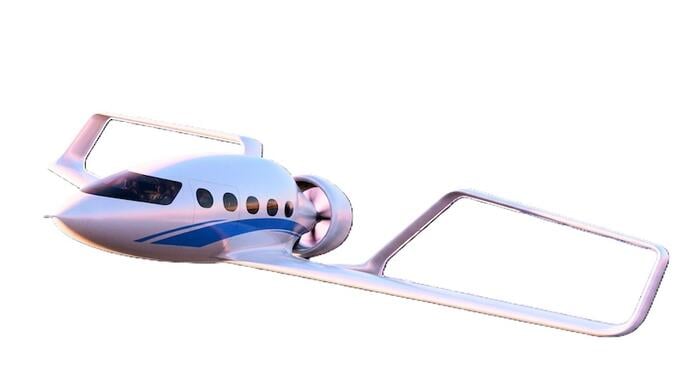
DBT Aero also is looking at larger aircraft, and the memorandum of understanding with MagLev is to evaluate a hybrid-electric, nine-passenger regional and cargo aircraft with an electric ducted fan providing boundary-layer ingestion and centerline thrust.
The technologies are synergistic. The laminar-flow fuselage is expected to deliver smoother air to the centerline fan, improving its efficiency and thrust, while the fan’s suction helps control the fuselage boundary layer and reduce drag.
MagLev is developing its magnetic-levitation rim-drive propulsion technology with support from Defense Advanced Research Projects Agency (DARPA) contracts, and the companies plan to test the HyperDrive electric ducted fan on one of DBT Aero’s subscale demonstrators.
The nine-passenger aircraft would need to be certified under more stringent FAA Part 23 airworthiness regulations, but DBT Aero is looking at an uncrewed cargo version of the 2LX carrying an 800-lb. payload and this would also require Part 23 certification, Duke says.
Based in Salt Lake City, DBT Aero is in discussion with prototyping companies to help build the conforming prototype but has not yet decided where it would produce the 2LX.
Former Archer Aviation executive and FAA official Michael Romaswski has joined DBT as chief technology officer, while former Archer Chief Operating Officer Tom Anderson is an adviser.

Related Content