This article is published in Aerospace Daily & Defense Report part of Aviation Week Intelligence Network (AWIN), and is complimentary through Nov 29, 2026. For information on becoming an AWIN Member to access more content like this, click here.
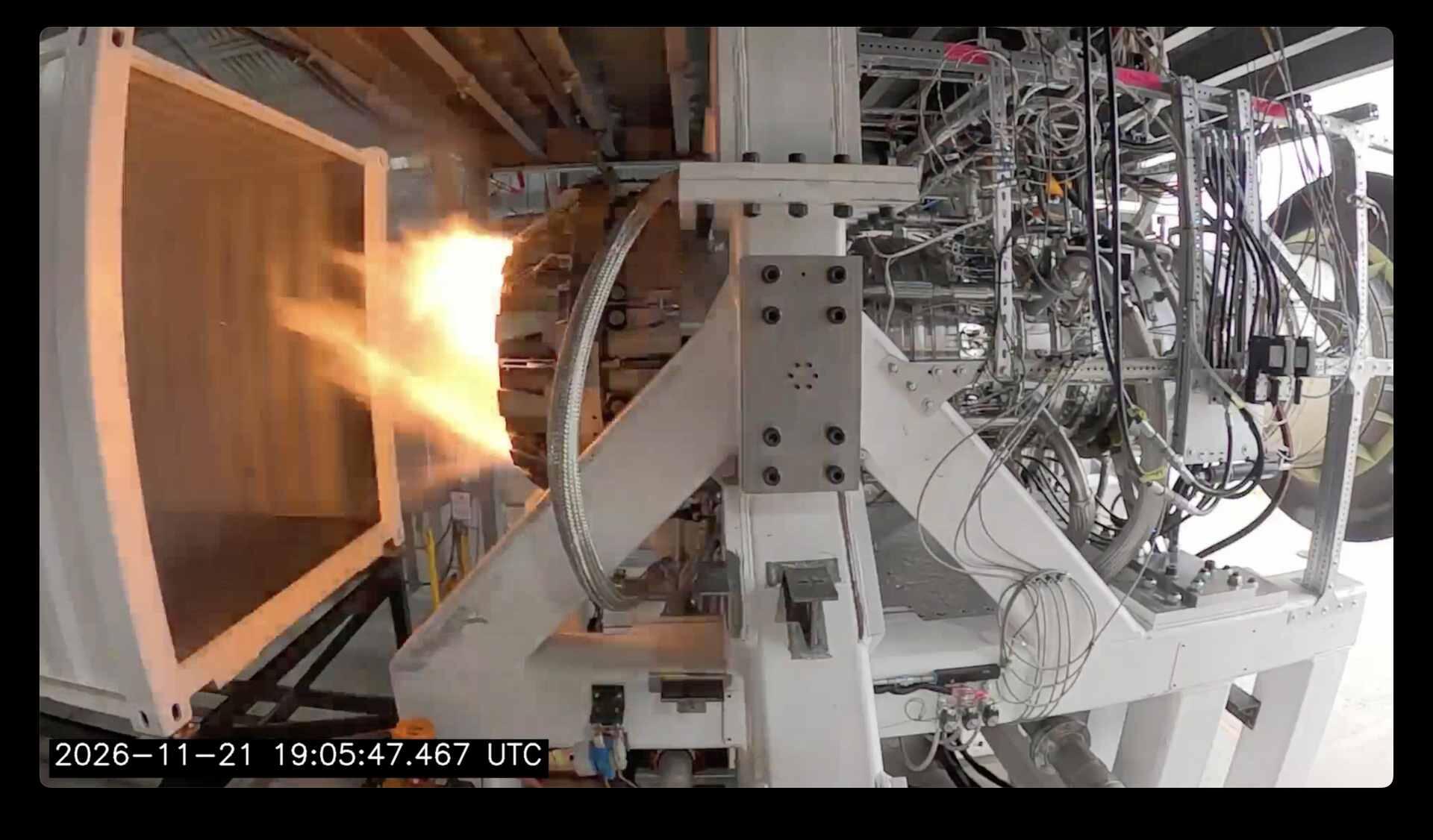
COLORADO SPRINGS—Test engineers at Boom Supersonic successfully ran the prototype core of the company’s in-house developed engine for the first time on Nov. 21, marking a key step toward production of the largest jet engine designed by a startup.
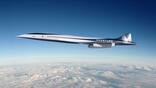
Core tests pave the way for the development of Boom’s Superpower industrial gas turbine and the follow-on bespoke 40,000 lb.-thrust Symphony medium-bypass turbofan, which is designed to power the company’s planned Mach 1.7 Overture airliner. Both will use the same six-stage high-pressure (HP) compressor and single-stage HP turbine core.
Conducted at Boom’s test facility at the Colorado Air and Space Port in Watkins, east of Denver, the core tests come four years after the company’s 2022 decision to go it alone on development of an engine for the Overture airliner. The initial target for the new core, however, will be the 42-megawatt industrial gas turbine (IGT) Superpower derivative launched in 2025 to power AI data centers.
The first light-off of the core took place on the second attempt, says Blake Scholl, Boom founder and CEO. “Prometheus would be proud, we thought there was less than a 50% chance it would work—but on the second try overall we got light off,” he told Aviation Week on Nov. 21.
“We ran it up to 6,500 rpm, and we had the benefit of nearly 2,000 real-time sensors,” Scholl said. “We deliberately did a short first run just to take a whole lot of data, and we expect to expand the test envelope of the core over the next two months.”
To create suitable test conditions for mapping the compressor performance that would validate the design code used in its development, the Watkins facility has been equipped with a vacuum pump and a variable exhaust nozzle. The variable exhaust simulates the presence of the low-pressure (LP) turbine, and back-pressures the compressor, while the vacuum pump simulates a bypass duct.
Boom is “tracking toward tests of a fully integrated engine by around the middle of next year,” Scholl said. The twin-shaft Superpower version will incorporate an LP spool as well as an associated free power turbine. Although there is more than 75% commonality between the two engine versions, there will be significant differences in the low spool. The Superpower features a four-stage LP compressor compared to the Symphony’s three-stage unit but has one less turbine stage and no fan. The Symphony will also be significantly lighter than the industrial version, Scholl said.
In parallel to core tests, Boom is also setting up an in-house foundry for casting single-crystal turbine blades and vanes from custom superalloys without conventional tooling. The new facility, located within the company’s newly developed 200,000-ft.2 “Superpower Superfactory” in nearby Centennial, Colorado, is described as all-digital and tooling free.
“Single crystal blades are not something you can procure. It is a constraint in the industry. We have found the best way is to do it ourselves. When we bet on suppliers, we tend to be disappointed,” Scholl added.

Related Content