This article is published in Aviation Week & Space Technology and is free to read until May 22, 2026. If you want to read more articles from this publication, please click the link to subscribe.

Opinion: U.S. Adaptive Engine Approach Echoes Past Missteps
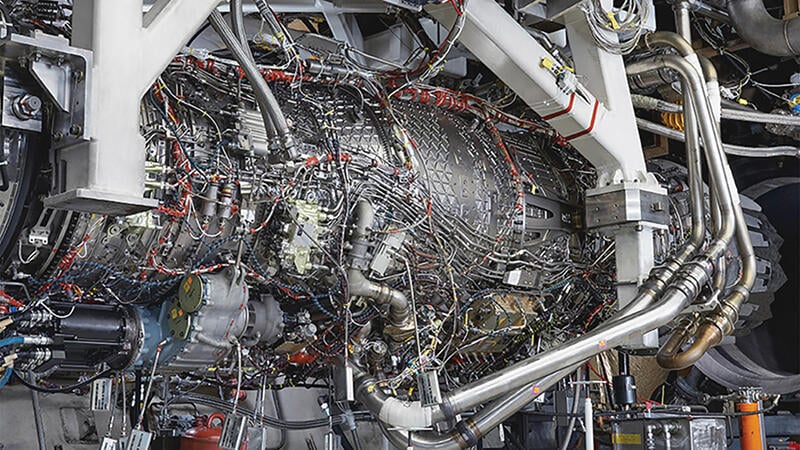
jet engine
Credit: GE Aerospace

Just because history tends to repeat itself does not mean it should.

It is not unusual for technology to take time to mature. That is especially true in the world of jet engines; in fact, technology delay began with the very first engine. Frank Whittle invented the turbojet in 1930. It did not fly in an actual aircraft until 1941. Later developments like single-crystal turbine blades and the use of ceramic matrix composites in hot sections took decades to move from concept to deployment.

Some of these delays came from the sheer time it takes to grow a technology to maturity. Others, like Whittle’s, stemmed from underinvestment; the UK government did not fully commit to developing the turbine until the engine was already running successfully.

Today’s new technology for military engines is the adaptive cycle. Adaptive engines switch as needed between economical, airliner-like cruising modes and full-on fighter performance. They improve range and performance while adding extra cooling capability for modern avionics and weapons systems. And yes, they are already running successfully.

Yet this breakthrough technology is also being delayed. Both Pratt & Whitney and GE Aerospace have been working on adaptive engines for more than 20 years. It is not a question of maturing the technology, as it was with single-crystal turbine blades and ceramic matrix composites parts for the hot section; the engines exist. We know how to do this today. Yes, government has contributed money to help develop them. But like the UK in the 1930s, the U.S. has chosen not to deploy the technology it has in hand or even to fund effectively the critical middle stage between invention and putting it in the field—development. That is what takes a workable idea to game-changing performance.

So why do the major engine companies not fully fund this development themselves? Unlike other engine technologies, adaptive propulsion does not have a civilian market. Airliners do not need fighter-like performance. That makes government the only customer. And make no mistake, the military wants this technology—in fact, the next generation of fighter jets is designed around it. So it falls to the government to make sure that the technology they need is ready to use when they need it.

But instead of building on success, the government has introduced delays. In 2024, the U.S. Air Force deferred its existing adaptive engine work to a future program, Next-Generation Adaptive Propulsion (NGAP). The idea was to advance the technology even further before committing to buy. The companies continued work, building a bridge to NGAP. But then the Trump administration proposed (and Congress agreed) to reduce the budget for advanced engine development by almost 25% in fiscal 2026—even while markedly increasing funding for the future aircraft being built specifically to take advantage of adaptive propulsion. This might be good news for the glider industry. For military aviation, not so much.

Moving engine money to airframes could be seen as trading away research for procurement, which is not a new idea. Building new aircraft without their accompanying engines is an odd procurement strategy. But what you learn in a year of research lasts forever. It improves today’s programs and those as yet undreamt of, while what you can procure in that year is what you can procure in that year. Both are necessary, and in this case, neither works without the other.

The Trump administration’s fiscal 2027 budget proposal includes a substantial increase in defense spending—for one year. Defense experts are already warning about the inability of procurement programs to absorb a one-time bump, particularly as those typically have only one year to spend whatever they receive. Research and development money is typically good for two years, so programs like NGAP can make more of a one-time bonus.

Lawmakers now have their chance to press the Pentagon on why it is not doing more in a budget that is all about more.

Good things do sometimes come to those who wait. But why wait? Technology is not waiting. America’s competitors are not waiting. The U.S. should not wait, either.

Jeremiah Gertler is senior analyst at the Teal Group market forecasting firm. These views are his own.