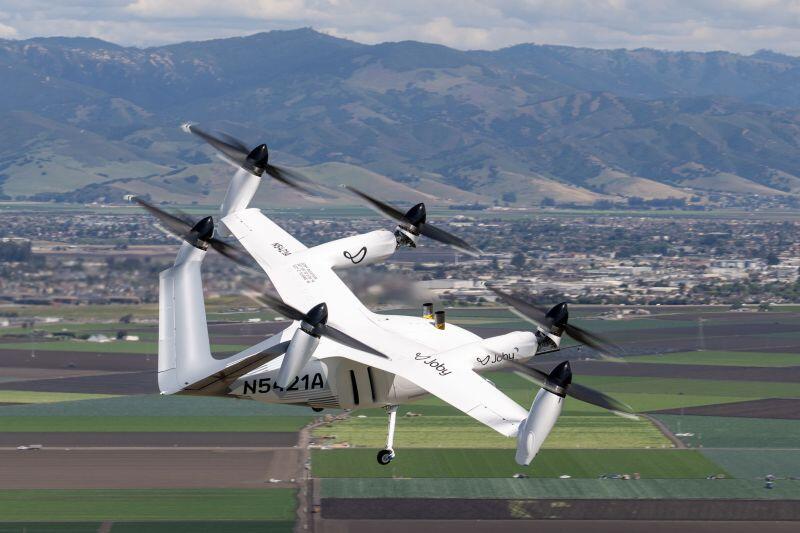
Joby Aviation eVTOL aircraft in flight.
Joby Aviation is seeking dismissal of Archer Aviation’s claims that it obscured the extent of its Chinese operations and improperly classified imports to avoid tariffs.
The allegations are part of a broader legal fight unfolding as the rival eVTOL developers compete to certify their aircraft and launch commercial operations. Archer, in counterclaims filed in March, accused Joby of unfair competition and false advertising, alleging that it downplayed the role of its Shenzhen, China-based subsidiary while portraying itself as a vertically-integrated U.S. manufacturer.
Joby, in a motion seeking dismissal of the claims filed in April, argued Archer’s allegations are “long on innuendo, but short on factual allegations supporting cognizable legal theories.”
Joby said Archer’s allegations that it “scrubbed” references to Chinese operations from public filings were contradicted by Joby’s own financial disclosures, which explicitly referenced operations of its Shenzhen-based subsidiary. Joby also argued Archer selectively quoted statements about domestic manufacturing while omitting references to its partnership with Japanese automaker Toyota.
Joby further argued Archer failed to establish a plausible causal connection between the alleged conduct and Joby’s lead in aircraft certification and development progress.
Archer counsel Eric Lentell disputed that argument, saying the company expects evidence gathered during discovery to support its claims.
“That’s the whole point of getting to do discovery,” Lentell told Aviation Week. “We think the court will allow us to do discovery to go chase that evidence.”
Lentell also challenged Joby’s characterization of its China operations, arguing the company has publicly emphasized its U.S.-based manufacturing identity while downplaying the scale of its overseas activities.
“I’ve seen some of their trade show stuff,” Lentell said. “One thing that really stood out to me said ‘completely vertically integrated in the U.S.’”
Joby also disputed Archer’s allegations that the company improperly classified imported goods on customs forms to avoid tariffs. The filing argued the claims were contradicted by customs documentation attached to the motion, which Joby said showed that it properly declared imported items such as aluminum plates, mold frames and photo albums.
The filing was accompanied by statements from outside parties, including Delta Air Lines, which urged the U.S. International Trade Commission to consider the broader competitive implications of an adverse ruling against Joby.
Delta, which has partnered with Joby on plans for airport shuttle services, argued that removing Joby from the market could materially harm competition in the nascent industry.
“Joby and Archer are the only two significant competitors in the eVTOL industry,” Delta wrote in its filing. “An exclusion order would shut down Joby’s existing product line, giving Archer an anti-competitive monopoly over the industry.”
Delta also said that Joby is farther along in the FAA certification process than Archer and argued there is no evidence Archer could quickly replace Joby’s planned services if the company was excluded from the market.
Lentell rejected the argument that potential import restrictions would materially damage competition, while Joby simultaneously argues its Chinese imports are insignificant.
“If their claim is that they don’t import anything from China that’s material, then it makes absolutely no sense that an exclusion order is devastating to either them or competition,” he said.
A federal judge in California had previously scheduled a May 19 hearing on Joby’s motion to dismiss, but the matter was removed from the court calendar and is expected to be decided on written filings without oral arguments, according to Lentell.
The broader legal dispute traces back to Joby’s original November 2025 lawsuit accusing Archer and former Joby employee George Kivork—who joined Archer from Joby in August 2025—of misappropriating confidential company files related to business strategy, infrastructure planning and aircraft operations. Archer has denied wrongdoing and has also filed a motion to dismiss portions of that case.

Related Content