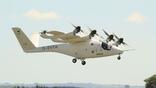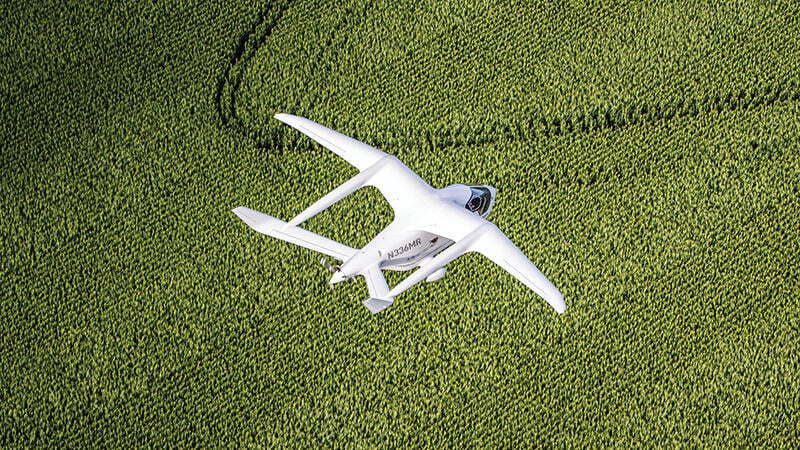
Beta Technologies was selected for seven of eight pilot projects, more than any other startup.
The advanced air mobility industry has spent years proving that air taxis can fly. The next step is moving beyond isolated demonstrations and into real-world operations.
To help accelerate the transition in the electric vertical-takeoff-and-landing (eVTOL) industry, the U.S. Transportation Department and the FAA have launched the eVTOL Integration Pilot Program (eIPP). As part of that effort, eight startups were selected for eight projects spanning 26 states to test early operational concepts using eVTOL, hybrid-electric and autonomous aircraft. The initiative pairs aircraft developers with state and local governments, operators and infrastructure providers to evaluate operational concepts for passenger transport, cargo logistics, medical services, regional aviation and autonomy.
The eIPP reflects a growing recognition within the FAA and industry that ecosystem development and community buy-in will need to advance in parallel with aircraft certification to lay the groundwork for a successful commercial launch. That means developers need to demonstrate how their vehicles operate within existing infrastructure, interact with air traffic control (ATC) and integrate with local communities.

Companies participating in the program include Ampaire, Archer, Beta Technologies, Electra.aero, Elroy Air, Joby, Reliable Robotics and Wisk Aero. The program is expected to kick off toward midyear and last for at least three years. Projects were awarded to a host of markets, including New York/New Jersey, Florida, Texas, North Carolina, Pennsylvania, Utah, Louisiana and Albuquerque, New Mexico.
The program builds on earlier FAA initiatives, including the drone-focused Integration Pilot Program (IPP) and its successor, the Beyond program. Backers of the eIPP say it reflects lessons from the rise of Chinese drone manufacturers, which have come to dominate the global consumer market—an outcome they hope to prevent in the emerging advanced air mobility (AAM) sector.
While companies are conducting extensive internal flight testing, those activities typically occur in controlled environments and for limited durations rather than under mission-representative conditions. The eIPP could allow more sustained operations involving airports, infrastructure partners, operators and regulators, assembling the many stakeholders required to launch new aviation services.
Didier Papadopoulos, Joby’s president of aircraft OEM, says the eIPP will provide operational data that cannot be gathered through company flight testing alone.
“The value of the eIPP is that you’re integrated with ATC in airspace that is operational,” he says. “When we did our first A-to-B flight demo over the summer [between Marina and Monterey, California], we got put on hold for an American Airlines flight to land ahead of us. We want to get more of those integration-type lessons where now we’re operating within cities with specific airspaces and specific traffic around that. We also need more data around being able to use landing and takeoff spots that are utilized by<\/p>
others—not just locations that are dedicated for Joby.”
Beta Technologies founder and CEO Kyle Clark told analysts on a recent earnings call that the program could accelerate commercial services by one year by allowing training, operational development and aircraft deployment to occur alongside certification activities. Beta was selected for seven of eight projects—more than any other company—including both VTOL and conventional-takeoff-and-landing variants of its Alia electric aircraft, as well as its growing network of electric Charge Cubes.
“The beauty of this program is that it gives us the chance to run these aircraft in real operational contexts over time,” says Kristen Costello, Beta’s head of regulatory affairs. “You get the aircraft flying regular missions and gathering data not just for us, but for the FAA and for operators as well.”
“Programs like this work best with a whole-of-government approach,” says Melissa McCaffrey, Archer’s head of government affairs. “You have the federal government, state governments, communities and companies all working together to make sure these aircraft operate safely and successfully. It also gives us the chance to grow the pilot population and the maintenance workforce, and it gives communities a chance to understand what these aircraft are and how they benefit local transportation.”
Archer founder and CEO Adam Goldstein has framed the eIPP as an opportunity to encourage early adoption and public acceptance, referring to it as the AAM industry’s “Waymo moment”—a comparison with the public rollout of autonomous cars in select U.S. cities.
“If you think about the first time you saw a Waymo, it felt like science fiction,” he said on a quarterly conference call. “Now our goal is to have millions of people in the biggest cities in the country see these aircraft as part of their everyday commute.”
The program also offers an opportunity to demonstrate autonomous aircraft in shared airspace, allowing regulators and ATC to gain hands-on experience as they craft future rules to enable autonomous cargo and passenger-carrying operations.
“This moves conversations about autonomy forward by allowing us to collect real operational data,” says Dan Dalton, Wisk’s vice president of commercialization and airline development. “You can demonstrate capabilities like detect-and-avoid and show how autonomous aircraft can safely integrate into the national airspace system. The ability to collect that data is what ultimately informs policymaking and leads to rulemaking.”
Reliable Robotics is pursuing a similar approach using Cessna Caravans modified with its Reliable Autonomy System. The company plans to demonstrate its technology in Albuquerque, where it already operates Reliable Airlines, a Part 135 cargo carrier. “It allows us and the airport to gain more experience with autonomy in advance of certification,” founder and CEO Robert Rose says. “It also allows air traffic controllers and other operators to gain familiarity with the technology before it enters commercial service.”
Ampaire will be evaluating its technology with a modified Cessna Caravan, too. An integrated hybrid-electric powertrain takes the place of the Pratt & Whitney PT6A, offering extended range and substantially reduced fuel burn. The company will be operating its cargo and logistics trials in Utah in partnership with the state’s transportation department.
“The eIPP is a transformative opportunity to bridge the gap between great technologies and their commercial use,” Ampaire cofounder and CEO Kevin Noertker says. “By increasing familiarity with new aircraft and propulsion systems across the ecosystem, you build confidence among pilots, maintainers, regulators and financiers. That ultimately accelerates adoption while improving safety and operational readiness.”
Electra CEO Marc Allen says the program also could help demonstrate how new aircraft types fit into regional transportation networks. The company is slated to fly point-to-point flights with its hybrid-electric Ultra-STOL aircraft to demonstrate the community benefits of what it describes as “direct aviation.” Electra’s aircraft is designed to take off and land in as little as 150 ft., allowing it to operate from small and underserved airports as well as ramps, taxiways and even vertiports.
“What programs like this allow you to do is move beyond the technology demonstration and start showing how the aircraft actually operates within the transportation system,” Allen says. “That’s when communities and operators begin to see the real value. When communities start seeing these aircraft operating in their own backyard, that’s when advanced air mobility becomes real.”
Listen to Check 6 podcast on innovations including Joby operational tests and hydrogen-powered helicopters aviationweek.com/check6

Related Content