
From Engine Failure To Joby Aviation: A 20 Twenties Winner's Path
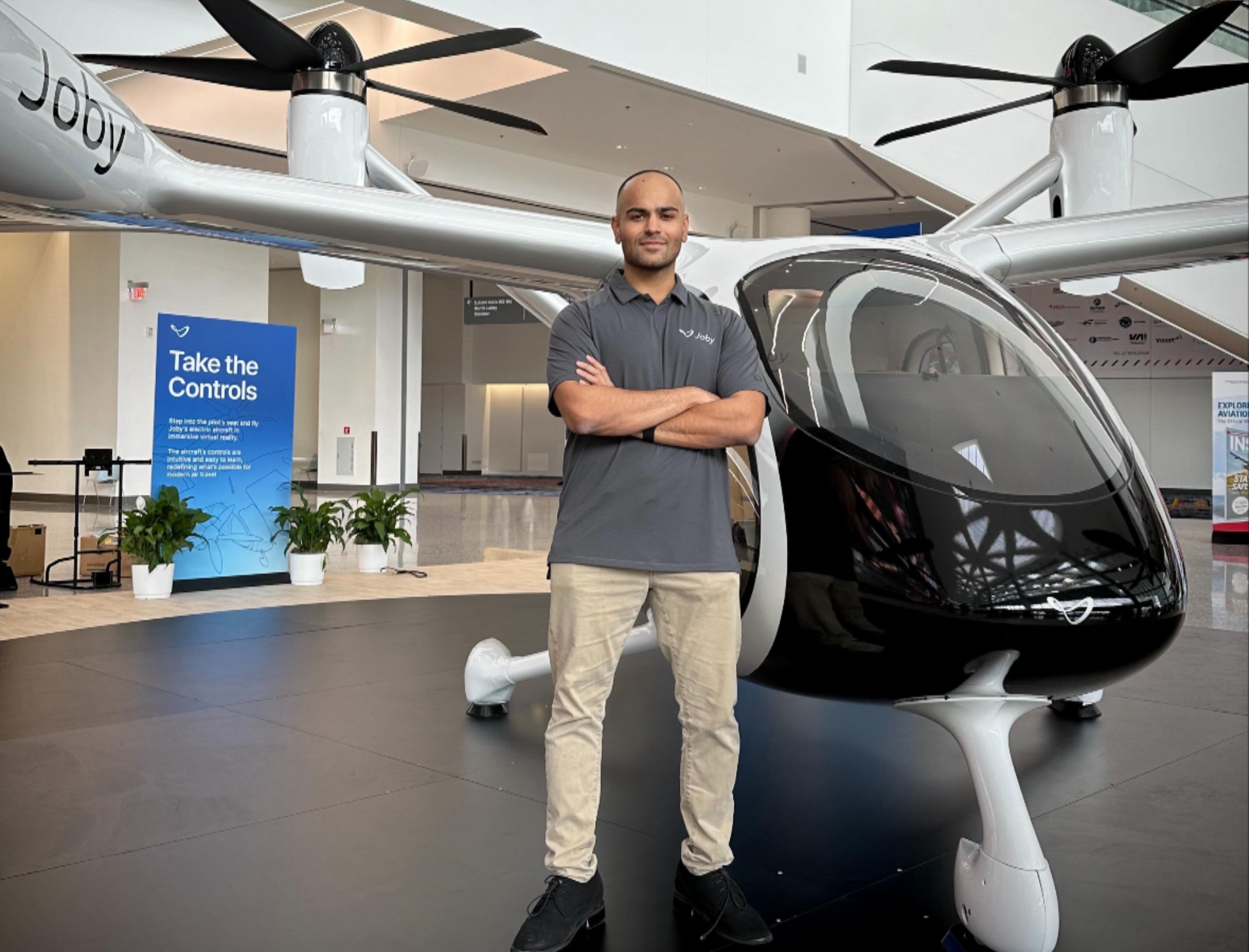
When a partial engine failure at 200 feet gave him a deeply personal reason to improve aviation safety, Vaibhav “Billy” Kumar, our 2019 20 Twenties winner, could not have predicted it would eventually lead him to Joby Aviation's all-electric air taxi program.
Today, as a staff modeling and simulation engineer, he develops adversarial testing techniques and surrogate models that shape how next-generation aircraft are designed and flown. But his path there was not linear; it ran through a startup, a pivot and a series of hard lessons about timing, technoeconomics and what it really takes to build something ambitious.
Can you share more about your current role? What are your key responsibilities and focus areas?
I’m a staff modeling and simulation engineer on the aircraft design and architecture team at Joby Aviation, where we’re building an all-electric air taxi to help people spend less time in traffic. I develop models of aircraft dynamics, sensors, and other systems, and use them in simulation to evaluate aircraft behavior and conduct trade studies that support aircraft design and flight control development.
One of my particular interests is developing adversarial testing techniques for complex, tightly coupled aircraft systems, where interactions between systems can produce behavior that is difficult to anticipate. These techniques efficiently search large spaces of possible operating conditions and inputs to identify scenarios that could cause a system to fail. My work also includes developing surrogate models that approximate complex system behavior, as well as pilot models that represent how a pilot controls the aircraft.
When you received the 20 Twenties award, what were your career aspirations? How have those goals evolved over time?
My love of airplanes drew me to aerospace, but what has always inspired me is the possibility of pushing the field forward: building on the achievements of those who came before us to tackle ambitious problems and change how people live and travel.
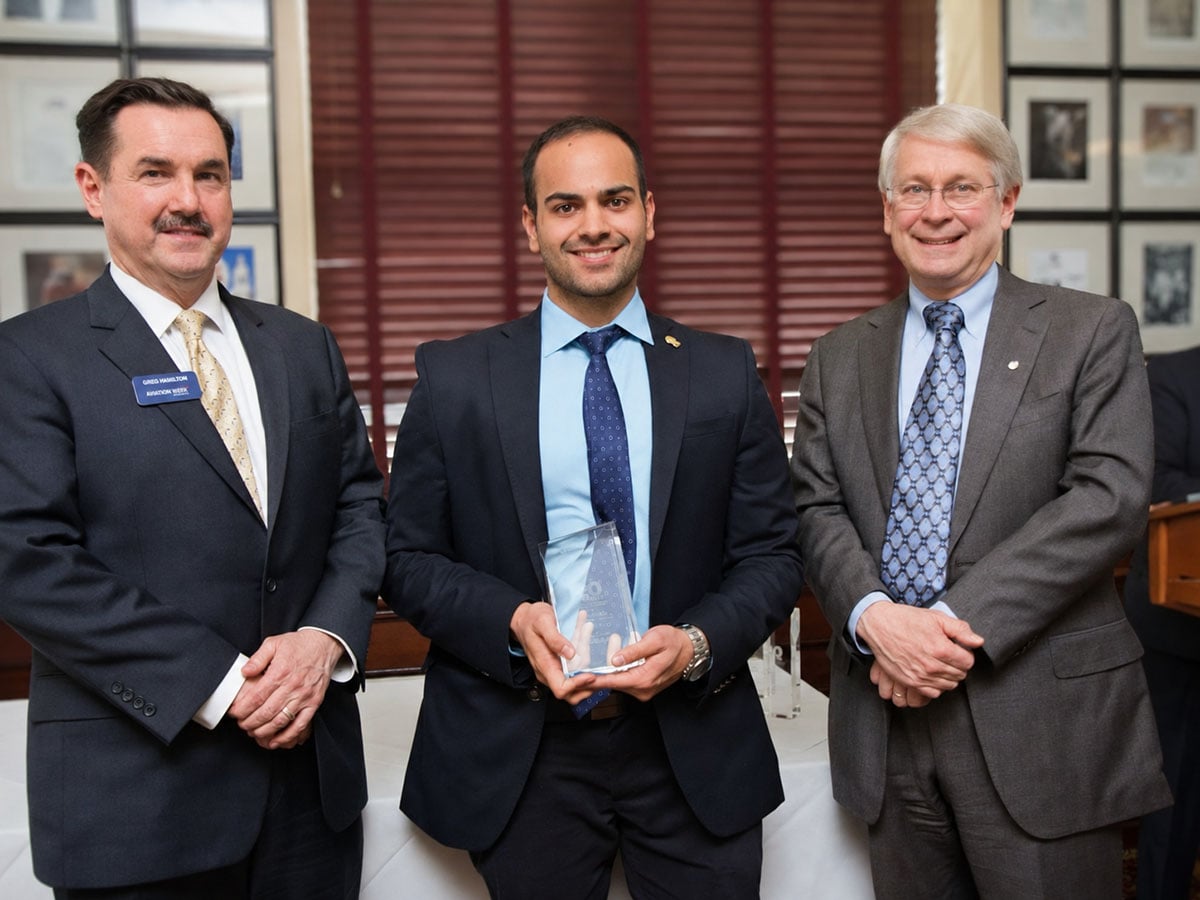
When I received the 20 Twenties award, I was in graduate school and had just pivoted from pursuing a PhD in aeroacoustics to building a company focused on predictive maintenance in general aviation. The inspiration came from the cockpit: during a solo flight in 2017, I experienced a partial engine failure at 200 feet in a single-engine aircraft. That experience gave me a very personal reason to improve aircraft maintenance and make flying safer.
As advances in batteries and distributed electric propulsion opened new possibilities for aircraft design, I saw a chance to pursue that same ambition from a different angle. I joined Joby in 2019, drawn by the opportunity to help build an all-electric air taxi that could change how people travel. It offered the ownership and close collaboration I wanted, along with difficult engineering problems tied to a larger purpose. It also gave me the chance to work alongside some of my heroes in aerospace, learning from their experience as I developed my own expertise.
Today, aviation remains a passion, but my ambitions extend beyond aerospace. I increasingly find myself asking where new technologies make it possible to solve problems that were previously out of reach—and where I could make a meaningful contribution.
What does a typical day or week look like for you now? How does it compare to what you envisioned when you were starting your career?
A typical week might find me working with flight test, systems, software and controls engineers to support architecture decisions on an interdisciplinary project, or helping other engineers work through a flight physics challenge. Alongside those broader efforts, I get the opportunity to tackle long-horizon design problems that require more focused technical exploration, where the constraints are demanding and the path to a solution is less clear. That’s a part of the work I particularly enjoy: figuring out where existing methods fall short and developing an approach that fits the problem.
I started my career in flight test. As a pilot with hands-on maintenance experience, I expected working directly with the aircraft to be the most rewarding part of my career. Over time, I discovered how much I enjoy solving difficult analytical and design problems. My role today brings that practical perspective into the technical challenges I find most fulfilling.
Your award recognized your work in aircraft maintenance-logbook automation. How has that project or research evolved, and how does it influence your work today?
When I received the award, I was building AirLogs, a startup designed to automate aircraft maintenance-logbook research for general aviation. After experiencing an engine failure on takeoff, I spent hours poring over maintenance histories and realized engineers were burning 15 to 20 hours a week hunting through logbooks just to prove compliance with airworthiness directives and service bulletins. The award helped us gain momentum, and we soon landed a pilot with two Part 145 repair stations to put the software to work.
Despite early traction, the timing and technoeconomics worked against us. A narrow addressable market made fundraising difficult, and the optical character recognition (OCR) tools of that era weren't accurate enough to reliably parse messy, handwritten aviation logs. When a pivot didn't pan out, the team went separate ways, leaving me at a crossroads. I still wanted the pace of a startup and the challenge of an ambitious engineering problem, but I missed aircraft design and wanted to work on something with a much broader reach.
AirLogs taught me that spotting an operational headache is only the start; the underlying technology must be ready, and the timing has to support a scalable business. When I looked at electric aviation, all those pieces lined up. Breakthroughs in battery energy density and electric motors were suddenly making distributed electric propulsion viable, giving me a rare chance to return to my aerospace roots at the exact moment the technology was unlocking new aircraft architectures. I joined Joby in 2019 and have been there ever since. Today, those early lessons still guide how I evaluate every new opportunity: why the problem matters, how the technoeconomics stack up, and why the timing is right to build it now.
Many 20 Twenties winners are passionate about paying it forward. Have you had opportunities to mentor others or contribute to your community? What has that meant to you?
We stand on the shoulders of giants, and I’m grateful to the mentors and colleagues I continue to learn from and look up to. Their example inspires me to pay it forward and be a source of guidance and encouragement for the next generation.
For me, that starts with mentoring Georgia Tech aerospace students and recent graduates entering the workforce, as well as newer engineers navigating career decisions. Increasingly, we talk about how they can create value with AI without surrendering their own thinking and judgment.
Beyond those individual conversations, I contribute through the American Institute of Aeronautics and Astronautics' Modeling and Simulation and Guidance, Navigation, and Control technical committees, helping review new research, organize technical sessions and support standards development. Guest lectures and talks, including at Georgia Tech and FlightSimExpo, let me share lessons from working in a fast-paced aerospace environment and discuss new ideas and developments in the field.
As a pilot, I also take kids flying in small airplanes through Young Eagles. That brings me back to what got me excited about aviation in the first place, and I love being able to share that experience with them. Whether it’s helping a new engineer find their footing or sparking a kid’s interest in airplanes, the reward is helping someone discover possibilities for themselves, just as others have done for me.
The aerospace and defense landscape has shifted significantly since you won. How has your early recognition positioned you to navigate these industry changes?
Early recognition is industry currency. When we were getting AirLogs off the ground, being named to Aviation Week’s 20 Twenties gave investors and partners a reason to take our ideas seriously before we had an established track record. In an aerospace landscape defined by rapid technological shifts, that kind of credibility is what gets an unproven idea evaluated instead of ignored.
But an award only opens the door; execution dictates what happens once you walk through it. Recognition gets you a seat at the table, but you still have to out-engineer the problem and deliver tangible results. I’m incredibly grateful for the access that early recognition provided, but I operate with the mindset that our actual work has to re-earn that confidence every single day.
What's been your biggest professional challenge since winning, and how did you work through it?
I’ve built my career engineering solutions to hard technical problems, but moving from small, scrappy teams to a larger organization exposed a hard truth: technical horsepower can only take you so far. Leading people requires a different manual.
As an outfit scales, the organic alignment of a tight-knit group disappears. You have to intentionally build it. A project plan organizes the work, but it doesn’t inspire people. Communicating a goal is just the starting line; you have to connect the dots and show your team how their contribution matters.
Navigating this transition requires intentional decision-making. I’ve had to learn to mentally detach from the heat of high-stakes scenarios and make clear, rational choices rather than react to pressure. External coaching, which I’m grateful Joby supports, has helped me check my assumptions and view challenges objectively. Ultimately, unlocking the best in other people is how we will deliver the ambitious technical work I care about.
What advice would you give to students or young professionals aspiring to break into aerospace today? Is there something you wish someone had told you?
Stop feeling the need to have your entire career meticulously mapped out. Instead, hunt down hard, novel projects. New paths are paved with difficult problems, and on every project, there are always a few challenges that matter disproportionately to its success. Take ownership of those. If you focus your energy on solving the most demanding problems rather than simply climbing a metaphorical ladder, you will likely find much more fulfillment and career development.
As you build your career, develop the technical depth required to question established thinking. If you see a better approach, don't just argue for it—take the initiative to build a prototype or run a demonstration, and bring hard data to the discussion. Strong fundamentals are your ultimate leverage: they allow you to explain exactly why an idea works, where its limitations lie, and make an undeniable case for doing things differently. However, especially in fields like aerospace, your understanding must also extend to the very approach you are trying to change. Many of our current rules, processes and standards are quite literally written in blood. The hard-won lessons behind them must inform whatever you build next.
To gain that wisdom, you must be willing to embrace the role of the apprentice. Actively seek out opportunities to work alongside veteran engineers and technical fellows who have spent decades solving the impossible. Don't just ask them for the answers; pay close attention to how they think. Watch how they deconstruct a decision, sniff out a hidden assumption, or instinctively recognize when a detail needs a closer look. There is an enormous competitive advantage waiting for you if you simply give yourself the time to listen, contribute and absorb their mental models.
If you were nominating someone for the 20 Twenties award today, what qualities or achievements would you look for?
This might be a more contrarian viewpoint, but I’d put considerable weight on the sheer ambition of the problem someone has chosen to take on. I want to see more young entrepreneurs building aerospace companies from the ground up, and more researchers pursuing moonshot ideas that could open entirely new possibilities for the field.
When we started AirLogs, people thought we were delusional, and in 2018, they were partly right. Today, the landscape has fundamentally shifted. We have university incubators, access to seed capital, and agentic AI tools that are commoditizing much of software development. These enablers make hard tech problems, even in a notoriously unforgiving sector like aerospace, far more tractable for small, agile teams. I’d like to see more young engineers seize this unprecedented window of opportunity and pursue entrepreneurial ideas that would have been completely out of reach just a decade ago.
In research, I’m drawn to the engineer asking a difficult, foundational question whose answer could change the direction of the industry. A true moonshot takes years to produce a definitive result, so judging that person primarily on a checklist of completed achievements misses what makes their work worth pursuing in the first place. I don’t just want to see a polished resume; I want to understand why their chosen problem matters, what makes their specific approach promising, the technoeconomics driving it, and the rigorous steps they have already taken to test their hypothesis.
For an award recognizing emerging talent, there is immense value in backing brilliant minds before their biggest accomplishments are behind them. Recognizing someone who has committed to an ambitious, highly uncertain problem sends a powerful, industry-wide message about the kinds of careers and bold contributions we actually want the next generation to pursue.
Finally, learn to leverage AI aggressively, but never surrender your own judgment. Generative, agentic and physical AI will fundamentally change how engineering is done, but you remain the engineer responsible for the final solution. AI can accelerate the work, but you must still understand the physical constraints, interrogate the outputs and ensure the design actually meets its real-world objectives. As technology does more of the heavy lifting, your technical fundamentals, teamwork and communication skills become even more critical. Ultimately, creating a successful solution still relies on understanding what other people need and working together to deliver it safely.
- Learn more about Aviation Week's 20 Twenties Program.
- For more information about sponsorship opportunities, contact Anna Dariotis: [email protected] or visit the website: https://20twenties.aviationweek.com/sponsor/current-sponsors/
- Aviation Week's 20 Twenties Awards, in partnership with Accenture.
Related Content

