EHang Exports Sandbox Model To Vietnam Amid China Delay
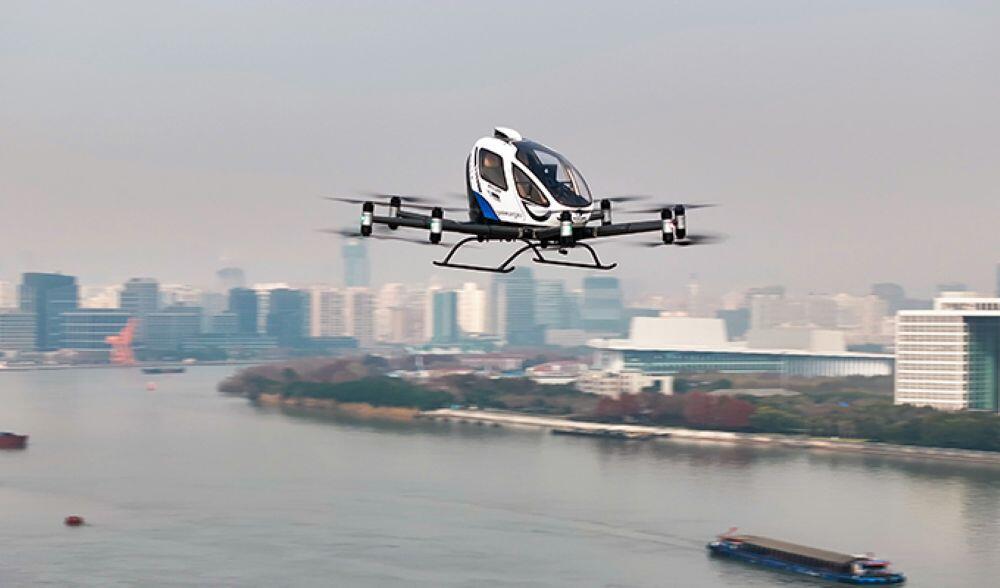
EHang is working around an indefinite regulatory stall at home, exporting its sandbox playbook to Vietnam—the newest jurisdiction in a program that lets foreign authorities validate an already-certified aircraft rather than certify from scratch.
The delay in China is administrative, not regulatory, UOB Kay Hian said in its Sept. 28 takeaways from the 2026 Virtual Asian Gems Conference. According to the Singapore-headquartered brokerage, the regulator gave priority to writing new rules for piloted aircraft after a June crash in Beijing. The ticketing approval EHang needs is queued behind them.
“The certificates themselves are not under review,” the note said. Analyst Ken Lee said EHang described the impact as short term. Overseas expansion, he wrote, is the company’s response.
UOB Kay Hian’s note came the same day EHang said it had signed a memorandum of understanding with HungViet Technology and Investment Trading JSC, a workforce training firm, and the Hanoi Department of Science and Technology to trial the EH216-S in the Vietnamese capital.
Under EHang’s Global Fast Track Program, the rollout will run in phases at Hoa Lac Hi-Tech Park, west of central Hanoi, covering controlled EH216-S operations, an uncrewed aircraft traffic management model, an operations control center, technical training, and joint standards work. EH216-S passenger- and cargo-carrying variants will be assessed against Vietnam’s rules and operating conditions.
HungViet will serve as the on-the-ground partner, committing technology, capital and personnel from next month, preparing the sandbox application and conducting controlled trial flights once authorized. The Hanoi department will guide the application through the approval process, while EHang will supply the aircraft, its operational technical system and training support. Plans call for extending the program to Ho Chi Minh City, Da Nang and other Vietnamese cities, targeting urban commuting and tourist destinations.
The Vietnam push comes with EHang fully certified at home but still unable to charge passengers for flights. It holds all four Civil Aviation Administration of China (CAAC) certificates—type, production, airworthiness and air operator—and had told investors that commercial passenger flights would begin in March.
The accident that triggered the caution was a two-seater Starair SA60L Aurora flying into Beijing’s CITIC Tower on June 26, which the city’s Chaoyang District Government later attributed to the pilot. On EHang’s second-quarter earnings call on Aug. 25, CEO Huazhi Hu said it had led regulators to adopt a more cautious posture across the industry; approval for passenger-carrying commercial operations in Hefei had been pushed back as a result. The eVTOL maker subsequently withdrew its full-year 2026 revenue guidance without providing a replacement.
At the Asian Gems Conference, EHang’s management said that the accident strengthens the case for autonomous flight, citing a figure of roughly 70% of air accidents caused by human error, UOB Kay Hian said. It did not name a resumption date, the conditions attached, or which authority would decide.
At home, EHang has run trial operations at its Guangzhou and Hefei sites for roughly 17 months, recently moving its first point-to-point test route at its Guangzhou headquarters into internal trial operation. Management’s unit-economics pitch, as recorded by UOB Kay Hian, assumes an operator flying a single EH216-S at a scenic site earns annual revenue of about RMB 2.4 million at a margin near 50%, with payback in roughly two years on an aircraft priced at RMB 2.39 million. The brokerage notes that revenue figure reconciles with 20 tickets a day at about RMB 450 over about 265 operating days.
On price, EHang positioned the EH216-S at $410,000, roughly a 12th of the $5 million-plus it attributed to Joby and Archer’s piloted aircraft, which count the U.S. military among their customers. The developer argued that its smaller airframe is designed to make vertiports as dense as bus or metro stops, under standards it helped draft. The $410,000 figure does not reconcile with the RMB 2.39 million price at current exchange rates; UOB Kay Hian’s note does not explain the difference.
Vietnam joins Thailand, Sri Lanka and Hong Kong in the Global Fast Track Program, which runs in four stages—framework alignment, sandbox buildout, validation flights and commercial launch—and builds on Chinese certification rather than starting from zero. Thailand leads, with a sandbox since October 2025, commercial approval targeted before year’s end, and a Phuket working group that has already selected a first test-flight site. Sri Lanka was announced in August; Hong Kong entered its Regulatory Sandbox X trial in June.
UOB Kay Hian, which does not rate EHang’s stock, identified a resumption of CAAC ticketing approval, Thai commercial approval before December and first commercial revenue in Sri Lanka as the events most likely to move the shares.
Related Content