The latest news on airports globally, with updates on financing, infrastructure expansion and sustainability initiatives.
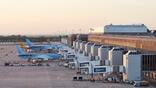
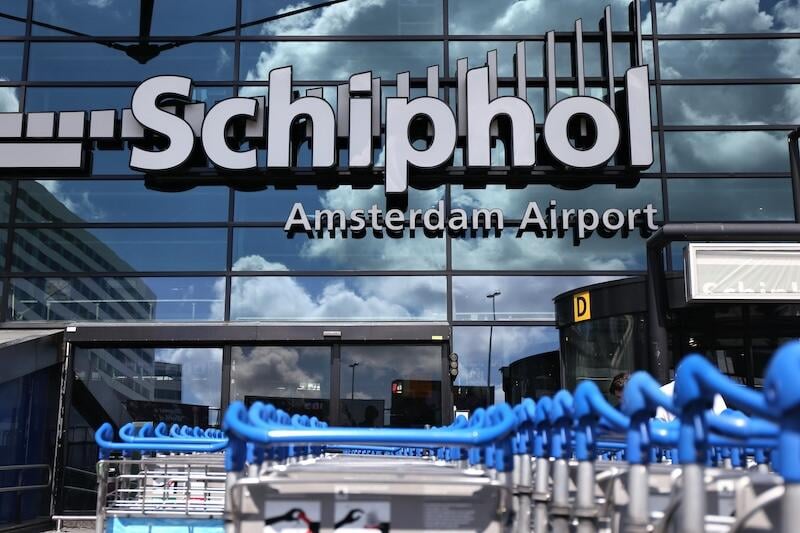
Amsterdam Airport Schiphol (AMS) manager Royal Schiphol Group posted net income of €214 million ($251 million) for the first half (1H) of 2025, more than doubling €99 million in 1H 2024. Revenue in 1H 2025 rose 20.4% year-over-year to €1.26 billion. The AMS operator noted it is aiming to secure external financing to fund €6 billion in planned investment over the next five years “to improve the quality of the airport.” Royal Schiphol added, “Solid financial management therefore remains essential to realize this investment agenda and to maintain a healthy financial foundation.” The group said construction of AMS’s new Pier A “is progressing according to plan, with the opening scheduled for April 2027.”
New Terminal One (NTO), the consortium building and managing the new international terminal at New York John F. Kennedy International Airport (JFK), successfully closed a $1.37 billion green bond issuance. Proceeds will be “used to finance the remainder of the anticipated costs” for the first phase of the project. The terminal is slated to open in 2026—with the first phase costing $9 billion—and all construction is expected to be completed by 2030. Green bonds are used to finance projects deemed by investors to be environmentally sustainable. Led by global airport developer and operator Ferrovial, the NTO private consortium is financing the cost of the facility and overseeing construction, which began in 2022. The consortium will run the terminal under a long-term lease with the Port Authority of New York and New Jersey that extends through 2060. The latest green bond issuance follows a similar bond issuance in 2024, bringing total financing raised by green bonds to $4.3 billion. At opening next year, the terminal will include an arrivals and departures hall and 14 gates. By 2030, the terminal—to be served only by international carriers—is expected to have 23 gates and span 2.4 million ft.2, making it JFK’s largest terminal. "The success of our green bond issuance reaffirms investor confidence” in the project, NTO CEO Jennifer Aument said.
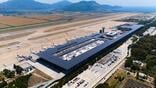
Velana International Airport (MLE) in the Maldives opened its new passenger terminal, replacing MLE’s original terminal opened in 1981. The new terminal has six gates and 47 check-in counters. Annual capacity is 7 million passengers, according to the Maldives government.
The U.S. Transportation Security Administration (TSA) issued a request for information (RFI) from the private sector related to the development and deployment of advanced technology at airport security checkpoints. TSA said in a statement it is aiming “to identify innovative, technology-driven solutions that strengthen aviation security and enhance the overall passenger experience.” The agency said it is seeking information on technology that could “reduce total operating costs, workforce requirements and manual labor; improve passenger experience and throughput; maintain full compliance with TSA’s performance standards and regulatory oversight; incorporate AI-driven threat detection and remote screening; increase adaptability during surge events or staffing constraints; and optimize workforce capabilities through automation or robotics for passenger and baggage screening.” RFI submissions are due by Aug. 1. Homeland Security Secretary Kristi Noem said at a recent press conference that her “goal would be that someday someone could walk into an airport, walk through a scanner and go right to their airplane. That's the goal, and that's the challenge I put in front of TSA and [technology] companies.”
The Moroccan government outlined a plan under which it will spend MAD25 billion ($2.7 billion) to expand passenger capacity at airports in Agadir, Casablanca, Fez, Marrakesh and Tangier ahead of the 2030 Fifa World Cup, which the country is co-hosting with Portugal and Spain. The central project will be building a new terminal and new runway at Mohammed V Airport in Casablanca. Another MAD13 billion will be “allocated to [airport] maintenance, modernization and land acquisition,” the government said. The plan aims to expand Morocco's total airport capacity to 80 million passengers by 2030, which would be more than double the country’s current annual capacity of 34 million passengers.

Related Content