We will be performing site maintenance behind the scenes on Sunday, December 14th starting at 5:00am EST and anticipate this update will take approximately 6 hours. You may experience intermittent issues during this time. We apologize for any inconvenience. 

This article is published in Advanced Air Mobility part of Aviation Week Intelligence Network (AWIN), and is complimentary through Dec 24, 2025. For information on becoming an AWIN Member to access more content like this, click here.

Archer, Joby Announce Plans For Saudi Arabia Flight Tests

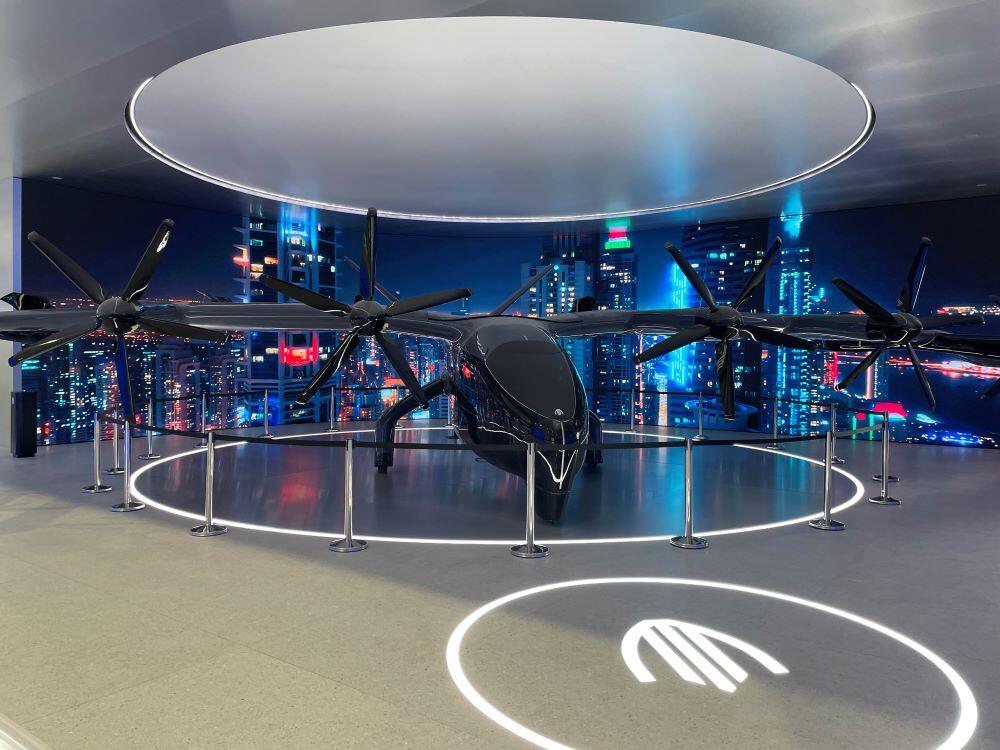
Archer’s Midnight displayed at the 2025 Dubai Airshow. Credit: Archer Aviation

Archer’s Midnight displayed at the 2025 Dubai Airshow.

Credit: Archer Aviation

Archer and Joby have both announced plans to launch flight testing in Saudi Arabia, part of an effort to establish air taxi services in the kingdom as an early international market.

Announced at the Dubai Airshow, the flight tests are expected to kick off early next year, in what the companies describe as a “sandbox” environment. The precertification tests will involve collaboration with local stakeholders to assess issues relating to operations, training, infrastructure, regulation readiness and public acceptance, among others.

Both companies also see an opportunity to lend technical expertise across type design, production and operations to help inform development of Saudi Arabia’s regulatory frameworks and ensure an efficient validation of the FAA’s type certification process. These efforts are aligned with Saudi Arabia’s Vision 2030 strategic plan for high-tech, tourism and economic development.

The initiatives are being launched as part of a multiway partnership with Saudi Arabia’s General Authority of Civil Aviation (GACA); The Helicopter Company, the largest helicopter operator in the kingdom; and Red Sea Global, developer of tourism megaprojects including the Red Sea Resort and Amaala, both luxury resorts on Saudi Arabia’s west coast. The Helicopter Company and Red Sea Global are both subsidiaries of the country’s Public Investment Fund. As part of the collaboration, the partners will explore integration of Archer’s Midnight and Joby’s S4 air taxis into both resort destinations.

The Saudi Arabia deals build on existing momentum that both companies and other eVTOL air taxi startups are enjoying across the Middle East and Central Asia. Joby has already signed an agreement to explore the sale of up to 200 aircraft, worth up to $1 billion, with Aloula Aviation, the aviation subsidiary of Saudi Aramco formerly known as Mukamalah Aviation. The startup has also partnered with Abdul Latif Jameel, a network of diversified businesses built around the influential Jameel family, to explore the establishment of an air taxi network with the optional sale of up to 200 aircraft. Abdul Latif Jameel is an investor in Joby.

UK startup Vertical Aerospace has also been looking to Saudi Arabia as a potential market. The startup last month hosted a “Saudi Arabia Discovery Day” event in Riyadh, in which members of its flight test team met with more than 60 representatives from local government and industry to discuss how the company’s VX4 aircraft can be deployed in the country in alignment with Vision 2030. Unlike its U.S. competitors, however, the company has not announced any intention of launching test flights there ahead of certification.

In addition to their Saudi Arabia plans, Archer and Joby have both been conducting test flights in the nearby United Arab Emirates (UAE) in preparation for commercial launches next year. They are also in the process of building out initial vertiport networks in their respective launch emirates–Joby in Dubai and Archer in Abu Dhabi.

Joby has performed five piloted test flights including transition from hover to cruise at the Dubai Airshow, marking the first time an eVTOL has flown there. Archer has a prototype on static display but did not fly at the event.

Joby is also further along in flight testing than Archer. The company recently announced the completion of its first point-to-point flight in the region, a 17-min., 21-sec. nm trip between its test base at Margham and Al Makhtoum International Airport (DWC). This marked the start of the second phase of its in-country test campaign following the completion of 21 out-and-back flights over the summer. The flights are being made with a piloted preproduction prototype S4, and do not count for credit toward FAA type certification.

The company says that its first Dubai vertiport at DWC is 60% complete, and development has begun at three additional sites at Dubai Mall, Atlantis the Royal and American University of Dubai. The vertiports are being developed in partnership with Skyports Infrastructure and the Dubai Road and Transport Authority as part of a six-year exclusive deal in the emirate. The DWC site is expected to be completed in early 2026.

Archer has been testing a remotely piloted version of its Midnight aircraft in Abu Dhabi and recently announced the conclusion of its flight test campaign there. Those tests featured full envelope expansion from hover to transition, although the company told Aviation Week that the aircraft’s aft props remained spinning at low speeds of 200-300 rpm rather than initiating the “stow routine” to stop them. All the lift was generated by the wing with speeds of more than 100 mph, Archer said.

Archer is converting the Abu Dhabi Cruise Terminal, located at Zayed Port, into a hybrid heliport for helicopters and eVTOLs. The company has received design approval from the UAE General Civil Aviation Authority and is planning to complete the project in the coming months. The effort is being undertaken with Falcon Aviation and Abu Dhabi Aviation.

While Archer and Joby are eager to launch precertification test campaigns and market survey flights in the region–and even believe those efforts can help streamline their FAA certification campaigns–Vertical Aerospace takes a dimmer view of the usefulness of those projects. The company’s chairman, Domnhal Slattery, has on multiple occasions publicly referred to those efforts as “certification tourism.

“Unquestionably, the Middle East is really important,” Slattery said on recent earnings call earlier in November. “Here is where it is not important. In what I would call strategic tourism around certification searches. We do not believe there is any real validity in an eVTOL OEM seeking out some fanciful early stage certification in the Middle East. It is not real, it is not tangible, and it is not portable globally. That is the reality.”

Ben Goldstein

Based in Boston, Ben covers advanced air mobility and is managing editor of Aviation Week Network’s AAM Report.